
Sandpaper Oak
Quercus pungens
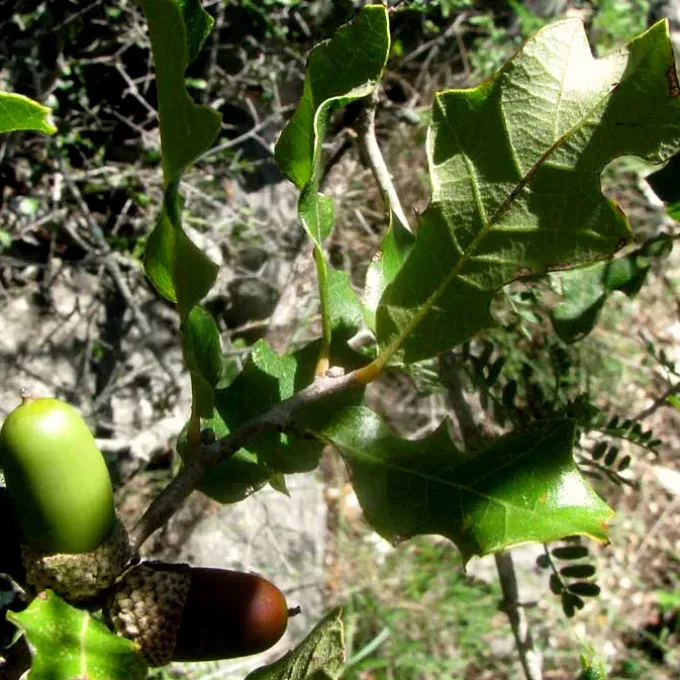
Description
Growing requirements
The Sandpaper Oak (Quercus pungens) is a resilient species belonging to the Fagaceae family, native to the arid regions of North America, particularly the southwestern United States. It has evolved to thrive in harsh, semi-arid environments where other species struggle to survive.
This species is highly drought-tolerant and prefers well-drained limestone-based soils. It exhibits excellent adaptability to low-nutrient substrates, making it a valuable plant for restoring arid landscapes and creating sustainable green zones.
Botanically, it is recognized by its tough, stiff leaves with distinct, spiny, or toothed margins that feel like sandpaper to the touch. The tree usually grows as a shrub or a small-to-medium-sized tree depending on the availability of moisture and local site conditions.
In forestry and landscaping, the Sandpaper Oak is valued for its ability to form dense thickets, which serve as effective windbreaks and erosion control barriers. It requires full sunlight to maintain its structural integrity and avoid foliage thinning.
Cultivation requires minimal intervention once the root system is established. Propagation is achieved primarily through acorns. Ensuring deep soil preparation before planting allows the taproot to grow unobstructed, which is crucial for the long-term survival of the plant.
Main diseases and pests
Like many species in the Quercus genus, Sandpaper Oak is susceptible to powdery mildew, which can affect the leaves during periods of high humidity and stagnant air. Proper spacing is essential to ensure adequate airflow within the canopy.
Various defoliating insects, including caterpillars and leaf beetles, may pose a threat by consuming foliage. Regular inspection of the trees during the growing season allows for early detection and mitigation of pest pressure.
Root rot is a potential risk if the soil remains waterlogged for extended periods. It is vital to select planting sites that provide excellent natural drainage to prevent the stagnation of water around the root zone.
Bacterial blight and cankers can occur following mechanical damage or insect boring. Maintaining tree health through moderate fertilization and avoiding physical injury to the bark helps minimize the risk of infection.
Integrated Pest Management (IPM) practices, such as removing infested plant debris and using biological controls, are highly recommended for maintaining the health of Sandpaper Oak stands in nursery or forest environments.