
Phillyrea-leaved oak
Quercus phillyreoides
Description
Sowing dates
Propagation of the Phillyrea-leaved oak is primarily achieved through acorns. Freshly collected seeds should be planted immediately in autumn to prevent them from drying out, which significantly reduces their viability and germination rates.
In nursery settings, acorns are sown at a depth of 3–5 cm in a well-drained, nutrient-rich potting medium. Maintaining consistent soil moisture is crucial during the early stages of germination to support the development of the primary root system.
Container cultivation is highly recommended for this species. It allows for better management of root development and ensures that the tree is well-established before being transplanted into the final growing site, minimizing transplantation shock.
Growth rates in the first few years are notably slow, which is characteristic of the species. Growers should provide adequate nitrogen-based fertilizers during the active growing season to stimulate stem elongation and leaf development.
Seedlings should be protected from harsh environmental conditions and competing weeds, which can easily overwhelm the slow-growing saplings. Regular monitoring of the soil moisture levels and light exposure is essential for high-quality plant production.
Growing requirements
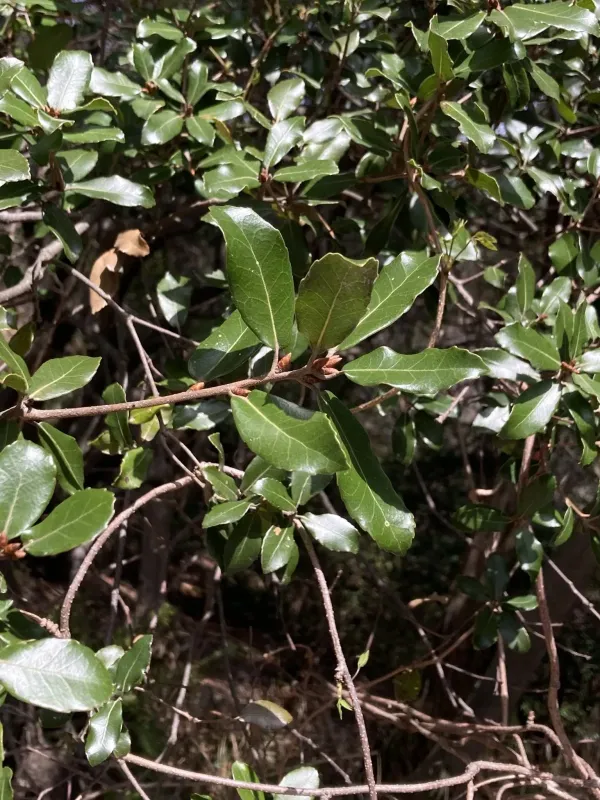
The Phillyrea-leaved oak (Quercus phillyreoides) is an evergreen tree belonging to the Fagaceae family, native to the warm temperate and subtropical regions of East Asia. It is prized for its dense, leathery foliage and compact, rounded growth habit.
This species thrives in well-drained, loamy soils with a slightly acidic to neutral pH. It is particularly sensitive to waterlogging, so site selection should prioritize areas with excellent natural drainage to prevent root rot issues.
Regarding climate, it prefers regions with mild winters and warm, humid summers. While it exhibits moderate drought tolerance once established, consistent irrigation during prolonged dry spells is beneficial for maintaining optimal canopy density.
The tree requires full sun for optimal photosynthesis and to maintain its compact, dense form. While it can tolerate partial shade, insufficient light often leads to an open, less attractive branching structure and reduced foliage color intensity.
In terms of management, annual pruning is generally limited to the removal of dead or crossing branches to maintain air circulation. Fertilization should be focused on balanced slow-release granular formulations applied during the early spring period.
Main diseases and pests
Fungal diseases, particularly powdery mildew, represent a significant threat to the Phillyrea-leaved oak. These pathogens thrive in stagnant air and high humidity, leading to the characteristic white coating on leaves that inhibits light absorption.
Scale insects and aphids are the most common pests encountered in this crop. They infest the undersides of leaves and young stems, drawing sap and causing significant stress to the tree, which can result in yellowing foliage or branch dieback.
Root rot, often caused by Phytophthora species, is a severe risk in poorly drained soils. Once established, this condition is difficult to treat, making preventative measures like proper site drainage and cautious watering schedules paramount.
Proper sanitation practices, including the removal and destruction of infected leaf litter and debris, are essential for disease control. Using sterilized tools for any necessary pruning helps prevent the spread of pathogens between plants.
- Consistent pest monitoring programs.
- Application of horticultural oils for scale insects.
- Use of systemic fungicides as a preventative measure.
- Maintaining proper tree spacing for air flow.
- Applying mulch to preserve soil moisture and health.