
Chinkapin oak
Quercus muehlenbergii
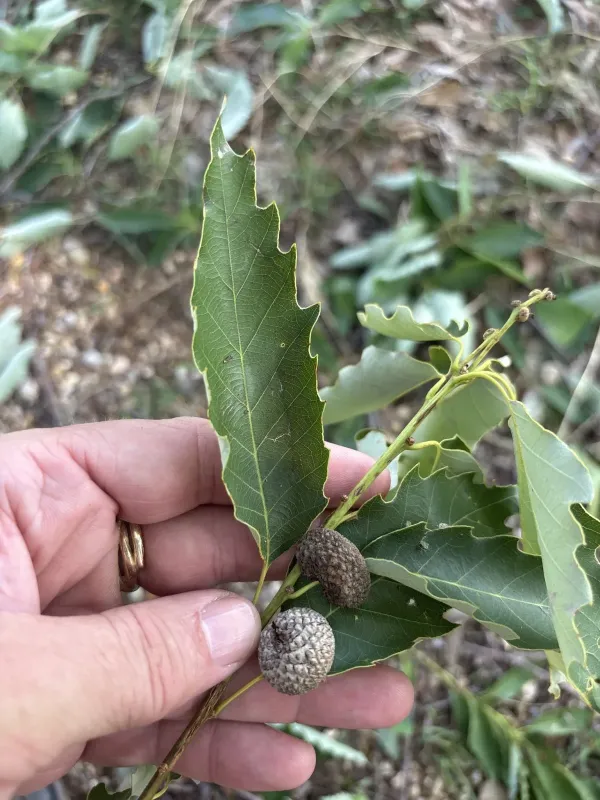
Description
Sowing dates
The propagation of the Chinkapin oak is primarily achieved by planting acorns in the autumn immediately after they have fallen. This method allows the seeds to undergo natural stratification, which is essential for uniform germination in the following spring.
If spring planting is preferred, acorns must be kept moist and stored in cool conditions, as they quickly lose viability if they dry out completely. Cold stratification for about 60 to 90 days at temperatures just above freezing is required to break seed dormancy.
When sowing in a nursery, seeds should be planted at a depth of 3 to 5 cm in well-drained, loose soil. Protecting the seeds from rodents is a critical step, as acorns are a highly favored food source for various forest animals.
Seedlings emerge in late spring and require consistent weeding and protection during their first growing season. Growth is relatively slow in the early years, so maintaining a clear area around the base of the plant is vital to prevent competition.
Transplanting to the final site is recommended when the tree reaches 2 to 3 years of age. A deep, well-developed taproot is characteristic of this species, so care must be taken to maintain soil structure around the root ball during the transition.
Growing requirements
The Chinkapin oak (Quercus muehlenbergii) is a member of the Fagaceae family, native to North America. It is unique among oaks for its preference for alkaline, limestone-derived soils, making it an excellent choice for regions with high soil pH.
While the tree is highly drought-tolerant once established, it prefers deep, fertile, and well-drained loamy soils. It avoids poorly drained areas, as the roots are sensitive to waterlogging, which can lead to root rot in susceptible environments.
Full sun is essential for the healthy development of this species. In shaded conditions, the tree often loses its characteristic form and may show signs of weakened vigor and sparse foliage, reducing its overall ornamental and timber value.
The Chinkapin oak is known for its hardiness and ability to withstand wide variations in temperature. It is highly adaptable to continental climates with cold winters and hot summers, provided that the soil moisture remains within a reasonable range.
Management practices should focus on mulching the root zone to conserve moisture and maintain a stable soil temperature. Occasional application of balanced nutrients can be beneficial, though the species is generally adapted to thrive in low-maintenance landscapes.
Main diseases and pests
Powdery mildew is the most common fungal disease affecting this species, particularly in regions with high humidity or poor air circulation. Proper spacing of trees is a key management strategy to mitigate this risk.
Oak wilt is a severe vascular disease that can affect the Chinkapin oak. Avoiding wounding the tree during the growing season and properly sanitizing tools can help prevent the spread of the fungal pathogen between healthy specimens.
Insects such as leaf rollers and acorn weevils can cause significant damage to the canopy and reproductive potential of the tree. Monitoring programs are essential to detect infestations before they escalate into major outbreaks.
Boring insects can pose a threat to the trunk and limbs, especially if the tree is already stressed by drought or environmental factors. Maintaining overall tree health is the best defense against successful insect attacks.
Young trees are particularly susceptible to browsing by deer and damage by small mammals. Using protective tubes or fencing is standard practice in silviculture to ensure the survival of young plants during their initial growth phase.
Harvesting
Harvesting of acorns typically occurs in the mid-to-late autumn. Fruits should be collected as soon as they drop naturally, ensuring that they are mature and have not been damaged by exposure to the elements or insects.
After collection, acorns must be sorted and cleared of debris. Damaged or infested seeds should be discarded immediately to prevent the spread of pathogens to the rest of the batch intended for storage or immediate planting.
Proper storage is critical if the acorns are not planted immediately. Keeping them at low, stable temperatures with sufficient ventilation prevents early germination and mold growth, which are the primary causes of seed loss.
Mechanical harvesting is sometimes employed in large-scale silvicultural operations, but care must be taken to prevent bruising the seeds. Careful handling ensures that the embryos inside the acorns remain viable for propagation.
The harvested crop serves both as a resource for commercial timber nurseries and as a sustainable food source for wildlife. Proper management of the harvest helps sustain the ecological health of the forest and ensures future generations of the species.