
Blackjack oak
Quercus marilandica
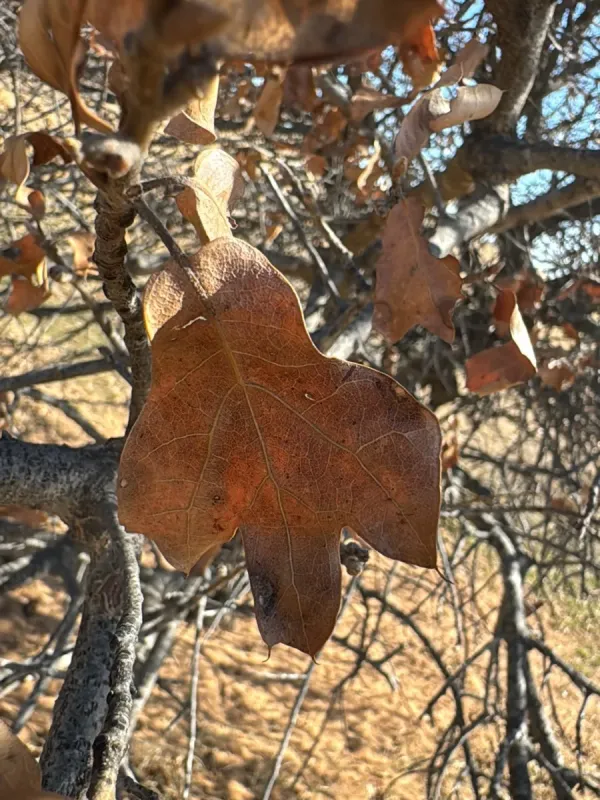
Description
Sowing dates
Propagation of the Blackjack oak (Quercus marilandica) is primarily achieved through planting acorns. It is highly recommended to sow seeds in the autumn immediately after harvesting, allowing them to undergo natural cold stratification during the winter season.
In nursery settings, acorns should be sown at a depth of 3–5 cm in well-drained soil. Proper moisture management is essential to prevent the seeds from drying out or rotting due to excessive standing water before germination occurs in early spring.
For spring sowing, seeds must be artificially stratified at temperatures ranging from 1°C to 5°C for at least 60 to 90 days. This process significantly improves germination rates and ensures a more uniform emergence of seedlings across the planting site.
The early growth phase of this species is characterized by a slow development rate. The plant focuses its initial energy on establishing a robust taproot system, which is why diligent weed control within the root zone is crucial for survival.
Transplanting young saplings is best performed during the dormant season, either in early spring or late autumn. Using container-grown stock with an intact root ball can greatly increase the success rate of establishing the tree in permanent locations.
Growing requirements
The Blackjack oak is a member of the Fagaceae family. In its natural range, it thrives in dry, rocky, or sandy soil conditions, often colonizing sites where other hardwood species struggle to establish themselves due to resource limitations.
This species is exceptionally drought-tolerant and capable of enduring high summer temperatures. It prefers sites with full sun exposure and generally performs poorly if subjected to competition from larger, faster-growing trees that create excessive shade.
Soil requirements for Quercus marilandica include excellent drainage and moderate aeration. While the tree can tolerate poor, nutrient-deficient soils, it shows a marked intolerance for prolonged soil saturation or standing water, which often leads to root rot.
The tree exhibits high resilience to various environmental stresses, making it suitable for regions with extreme climate fluctuations. Its strong branch architecture also provides significant resistance against wind damage in open landscapes.
Regarding soil pH, the species prefers slightly acidic to neutral substrates. When cultivating in nurseries, light fertilization is advised; however, avoiding excessive nitrogen is key to preventing the growth of succulent, tender shoots that are susceptible to winter injury.
Yield
Economically, the Blackjack oak is highly valued for its dense, hard wood, which is considered an excellent source of firewood due to its high heat output. It is frequently utilized in reforestation projects to stabilize eroding slopes and degraded land.
Beyond wood production, the tree serves a vital ecological role. Its acorns provide an essential food source for wildlife, particularly birds and small mammals, contributing to the biodiversity and overall health of local forest ecosystems.
The tree typically begins to produce acorns at the age of 10 to 15 years. While not a commercial crop for human consumption, the production of seeds is critical for nursery propagation and local restoration efforts in harsh environments.
The tree’s compact size and unique foliage make it an interesting option for low-maintenance landscaping in hot, dry regions. It is often used where other, more demanding deciduous species fail to thrive due to lack of water or poor soil quality.
Sustainable harvest of the species involves periodic thinning of forest stands to promote the growth of healthier individuals. Such management practices ensure a long-term supply of timber while maintaining the ecological functionality of the forest.
Main diseases and pests
The Blackjack oak is susceptible to several pathogens, most notably bacterial leaf scorch caused by Xylella fastidiosa. This disease interferes with the tree's vascular system, leading to canopy dieback and, eventually, tree mortality if left unchecked.
Acorn damage by weevils and other nut-boring insects is a common issue that reduces seed viability. Monitoring and implementing preventive treatments during the flowering and seed-development phases are essential for effective nursery management.
Fungal infections, such as powdery mildew, may occur in high-humidity conditions or in stands with inadequate airflow. Promoting good sanitation by removing infected branches helps in curbing the spread of such diseases within the population.
Stem-boring insects often target trees that are already stressed by drought or mechanical injury. Maintaining tree vigor through proper site selection and adequate moisture management is the most effective way to prevent significant pest infestations.
Large mammals, such as deer, often browse on the tender foliage and twigs of young saplings, which can stunt growth or cause structural deformity. The installation of protective guards around young trees is highly recommended during the establishment phase.