
Lusitanian oak
Quercus look
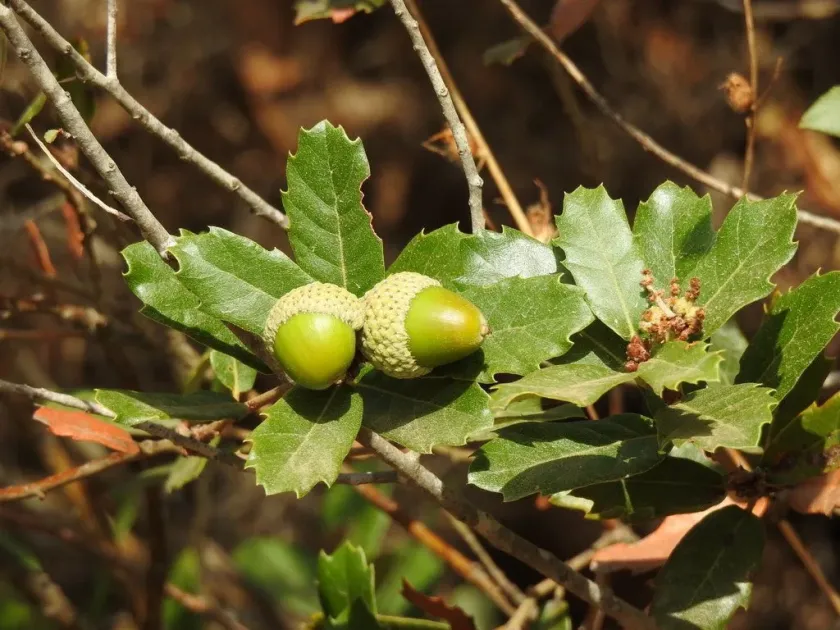
Description
Sowing dates
Sowing of Lusitanian oak acorns is typically carried out in autumn immediately after harvest to allow for natural stratification in the soil. In nursery environments, spring sowing of pre-stratified seeds is also common once the soil warms up sufficiently.
The planting depth is critical and usually ranges from 5 to 8 centimeters depending on the size of the acorn and soil texture. Seed treatment with fungicides before sowing is recommended to prevent soil-borne pathogens from damaging the emerging embryos.
The planting pattern should facilitate the development of a strong root system, with row spacing usually maintained between 50 and 70 centimeters. Planting density is adjusted based on whether the saplings are destined for reforestation or industrial plantation purposes.
Container-grown seedlings often show higher survival rates when transplanted to their permanent sites. This method requires careful temperature control and consistent monitoring during the early stages of seedling development.
Maintaining optimal soil moisture is essential for uniform germination. Overly dry or waterlogged conditions must be avoided, as the tender sprouts of Quercus lusitanica are sensitive to both drought stress and root rot during their initial establishment phase.
Growing requirements
Lusitanian oak belongs to the Fagaceae family and is native to the Mediterranean climate of the Iberian Peninsula and North Africa. The species is well-adapted to warm, dry conditions, showing resilience to seasonal water scarcity.
The species prefers well-drained, slightly acidic to neutral soils rich in organic matter. Heavy clay soils that tend to waterlog are unsuitable, as they significantly increase the risk of root pathogens and eventual decline of the tree health.
As a light-demanding species, the Lusitanian oak requires full sun exposure to thrive. Shade competition from other trees or dense brush can severely stunt its growth and result in poor structural development of the trunk.
The climate must be relatively mild, as this species is sensitive to extreme frost, particularly during the early years of growth. Late spring frosts can damage the new shoots, impacting the seasonal growth cycle.
Agrotechnical management includes regular weed control around the base of the trees during the first few years. Applying mulch helps conserve soil moisture and moderates temperature fluctuations in the root zone.
Yield
The economic value of Quercus lusitanica is historically linked to the production of galls, which are used as a source of tannins. These galls are harvested from leaves after being induced by gall wasps, providing a specialized non-timber forest product.
The wood of the Lusitanian oak is dense and durable, making it a valuable raw material for furniture production and carpentry. While growth rates are moderate, the long-term quality of the wood makes it a sustainable resource in managed forestry.
Acorn production for forest regeneration follows a periodic cycle, with heavy "mast years" occurring intermittently. This variability must be integrated into seed collection planning and long-term silvicultural management.
Yield quality is highly dependent on effective site selection and consistent management practices. High-density plantations require periodic thinning to ensure that individual trees have enough space to reach maturity and produce high-quality timber.
Exploitation of forest stands generally begins several decades after planting. Proper site preparation and early-stage maintenance significantly improve the overall economic return of the plantation over its lifecycle.
Main diseases and pests
The oak gall wasp is the primary biological agent affecting this species. While the galls are a commercial product, excessive infestations can weaken the trees and reduce overall vigor, necessitating balanced population management.
Fungal diseases such as powdery mildew are common, particularly in young leaves during humid weather. Proactive monitoring and the application of appropriate fungicides are necessary to prevent severe defoliation.
Root rot caused by Phytophthora species represents a major threat, especially in areas with poor drainage. Once established, these infections are difficult to treat and can result in the loss of entire stands of trees.
Wood-boring insects, including various species of longhorn beetles, can cause significant damage to the trunk and branches. Regular sanitary pruning and the removal of infested wood are essential components of an integrated pest management strategy.
Environmental stressors such as prolonged extreme heat or severe hailstorms can lower the tree's immune response, making it susceptible to secondary infections. Regular field inspections are vital for the early detection of any health issues.