
Jack oak
Quercus jackiana
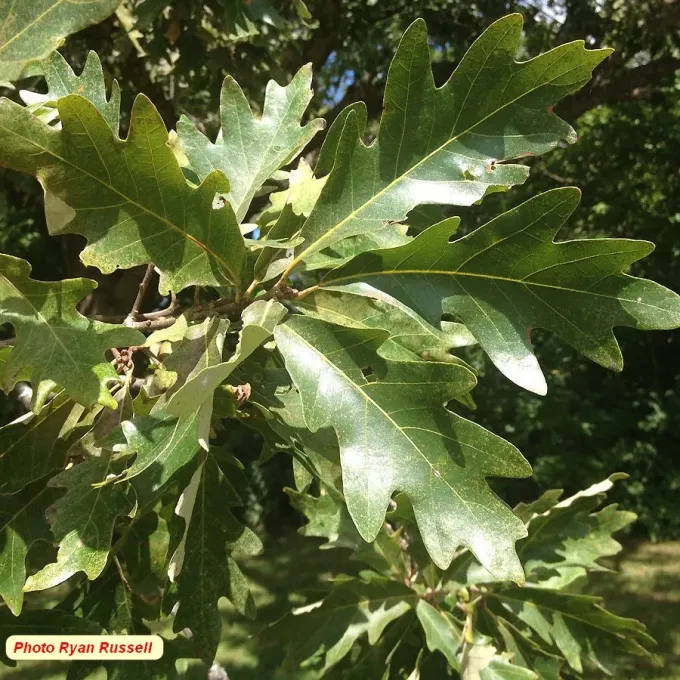
Description
Growing requirements
The Jack oak (Quercus jackiana) is a rare hybrid tree belonging to the Fagaceae family. It is a natural cross between the Bur oak (Quercus macrocarpa) and the White oak (Quercus alba), found sporadically in regions where these two species co-occur.
Botanically, it displays intermediate features, combining the deeply lobed leaf structure of the White oak with the size and vigor characteristic of the Bur oak. The tree develops a strong, spreading crown that makes it an excellent specimen for large landscapes.
Regarding soil requirements, this species thrives in deep, well-draining, and nutrient-rich soils. It prefers neutral to slightly acidic conditions and cannot tolerate permanently waterlogged areas that may lead to root suffocation.
Climatic requirements involve full sun exposure to maintain foliage density and branch strength. It demonstrates high cold tolerance, making it suitable for temperate climates where its parent species are natively adapted.
In terms of usage, the Jack oak is primarily valued in botanical gardens and ornamental landscaping. Because of its scarcity, it is not harvested commercially for timber, though its wood is considered durable and of high structural quality.
Main diseases and pests
Jack oaks can be susceptible to common oak diseases such as powdery mildew, which affects foliage growth during humid summer months. Proper pruning to increase airflow in the canopy is essential for preventing spread.
Pests like the oak twig pruner or various species of gall wasps can cause localized damage to the branches. Monitoring tree health during the peak spring growing season is recommended to detect these infestations early.
Anthracnose is another prevalent disease that can lead to leaf spots and early defoliation. Ensuring that the tree is not stressed by drought or malnutrition helps in boosting its natural defense mechanisms against such pathogens.
Competition from invasive plant species can hinder the development of young Jack oak saplings. Maintaining a mulch ring around the base of the tree is a vital agricultural practice to minimize root zone competition.
To ensure long-term health, regular inspections for signs of wood-boring insects are necessary. Detecting early symptoms of infestation can save the specimen from severe structural damage to the trunk and main branches.