
Silverleaf oak
Quercus hypoleucoides
Description
Growing requirements
The Silverleaf oak (Quercus hypoleucoides) is an evergreen species belonging to the Fagaceae family, native to the mountain ranges of the Southwestern United States and Northern Mexico.
The tree thrives in well-drained, rocky, or sandy soils, reflecting its adaptation to mountainous environments. It is essential to ensure that the site has optimal drainage to avoid root stagnation.
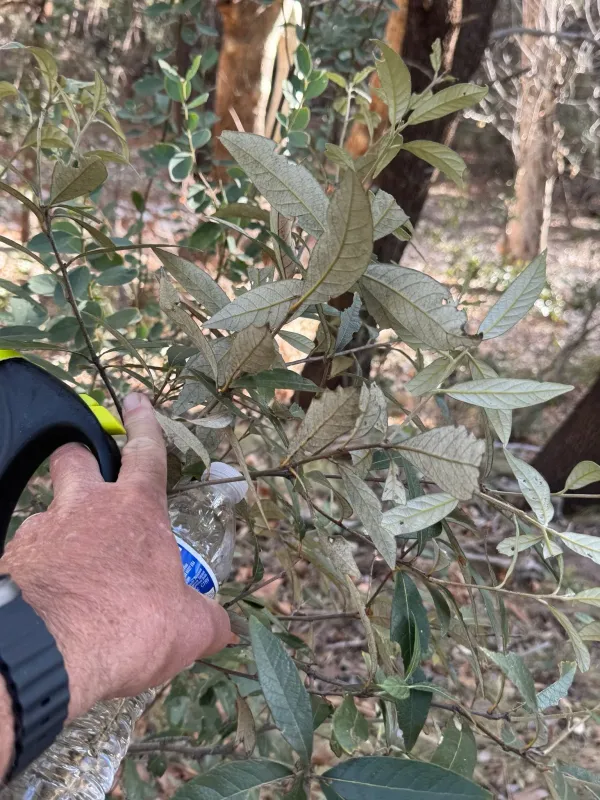
Botanically, it is known for its distinct foliage; the upper side of the leaves is deep green, while the undersides are covered with a dense, silvery-white tomentum, providing excellent ornamental appeal.
Climatic requirements favor a mild, temperate climate with ample sunlight. While the species is moderately drought-tolerant once established, it requires consistent care during its early growth years to build a resilient structure.
In terms of хозяйственное usage, the Silverleaf oak is primarily utilized in landscape design and xeriscaping, serving as a focal point in gardens where its unique leaf coloration can be showcased.
Main diseases and pests
Common threats to Quercus hypoleucoides include powdery mildew, which tends to proliferate in environments with poor air circulation or prolonged high humidity levels during the summer months.
Insect pests such as leaf miners and gall wasps can affect the aesthetic quality of the foliage. Early detection is crucial to maintain the tree's health and visual impact in a landscape setting.
Root rot, often caused by improper irrigation practices in heavy soils, remains one of the most critical threats to the long-term survival of the silverleaf oak.
Effective management includes regular maintenance, such as clearing debris from the base of the tree and ensuring that the canopy receives enough airflow to prevent moisture buildup.
Integrated pest management strategies should be employed to control outbreaks, utilizing specific fungicides and insecticides only when necessary to preserve the ecological balance of the garden.