
Havard oak
Quercus havardii
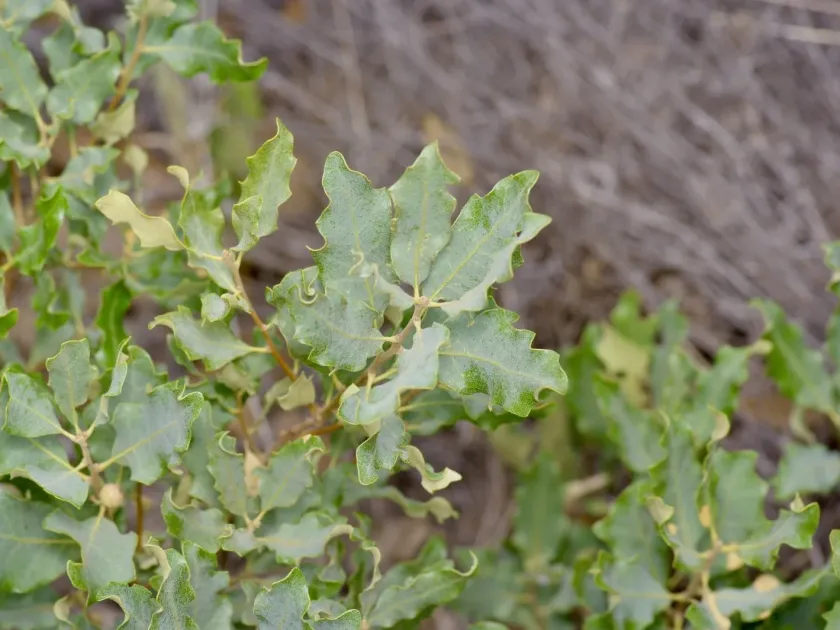
Description
Growing requirements
Havard oak is a small deciduous shrub belonging to the Fagaceae family, widely recognized for its exceptional resilience in harsh desert environments.
Native to the southwestern United States, this species plays a vital role in stabilizing sandy soils and preventing wind erosion in arid landscapes.
The plant exhibits high tolerance to extreme drought and heat, utilizing an extensive root system to thrive in nutrient-poor, sandy environments.
Cultivation practices focus on maintaining the health of existing thickets, as the species relies heavily on underground rhizomes for reproduction and spread.
It requires minimal agronomic intervention, provided that the soil conditions allow for proper drainage and natural aeration of the root zone.
Yield
The economic value of this crop is primarily linked to livestock grazing and wildlife habitat management in semi-arid regions.
Acorns produced by the shrub serve as a critical food source, supporting the ecosystem and contributing to the sustainability of local ranching operations.
Main diseases and pests
The primary threats include fungal pathogens that can affect root systems under conditions of prolonged waterlogging or poor soil sanitation.
Additionally, various herbivorous insects and gall wasps can cause significant foliage damage, impacting the overall productivity of the shrub colony.