
Griffith's oak
Quercus griffithii
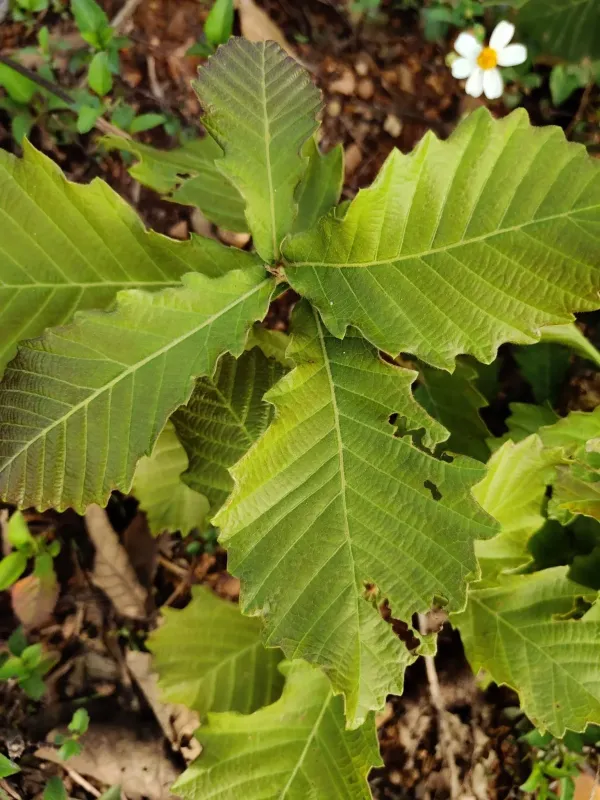
Description
Growing requirements
Griffith's oak (Quercus griffithii) is a deciduous hardwood tree species within the Fagaceae family, native to the mountainous regions of South and Southeast Asia. It thrives in subtropical climates, often appearing in mixed broadleaf forests where atmospheric humidity is relatively high.
The species requires well-drained, nutrient-rich soils to reach its full growth potential. While it can handle varied terrain, it performs best on slightly acidic loamy soils that prevent waterlogging around the root zone, as the roots are sensitive to anaerobic conditions.
Botanically, Griffith's oak is characterized by its distinct leathery foliage and sturdy structural branches. The tree is known for its relatively moderate growth rate and high adaptability to mountainous ecological niches, making it a key component of its native forest ecosystem.
Cultivation practices focus on ensuring young saplings are protected from excessive direct sun exposure during their initial establishment. Maintenance includes thinning competitive vegetation to provide sufficient space and resources, which directly correlates to the quality of the timber produced later.
Economically, the wood of Quercus griffithii is highly valued for its durability, hardness, and resistance to environmental degradation. It is widely used in traditional construction, flooring, and furniture manufacturing, supporting local industries that rely on sustainable forest management.
Main diseases and pests
Powdery mildew represents a common fungal threat to Griffith's oak, particularly in crowded plantations with poor airflow. Regular inspection of the leaves is necessary to catch early signs of infection and prevent widespread damage.
Defoliating insects, such as caterpillars and various leaf-rolling moths, pose a significant risk to the foliage during the peak growing season. Integrated pest management strategies, including the use of pheromone traps, are often employed to monitor populations.
Root rot, specifically caused by soil-borne pathogens like Phytophthora, can devastate plantations if drainage is inadequate. Agronomists recommend monitoring soil moisture levels closely to avoid conditions that favor pathogen development.
Boring beetles can target trees weakened by drought or mechanical injury, acting as secondary pests that significantly damage the timber quality. Maintaining tree health through proper nutrition and hydration is the primary defense against such infestations.
Environmental stress, such as frost in higher altitudes or prolonged heatwaves, can impact the tree's immune system, making it more susceptible to opportunistic diseases. Proper site selection based on microclimate analysis is crucial for long-term health and productivity.