
Gambel oak
Quercus gambelii
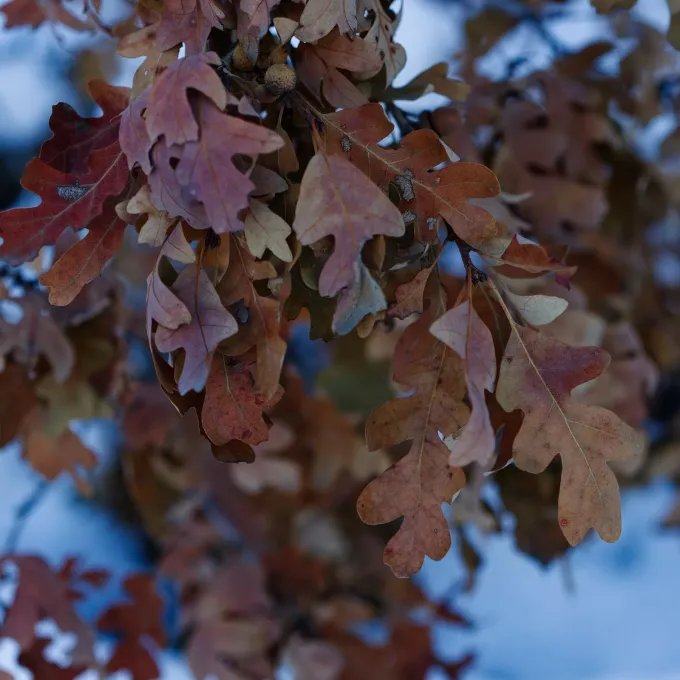
Description
Sowing dates
Gambel oak (Quercus gambelii) propagates naturally through acorns, which require moist soil and a period of cold stratification to successfully germinate after winter.
In nursery settings, it is best to sow seeds immediately after collection in the autumn, ensuring they are placed at a depth that protects them from drying out.
A distinctive feature of this species is its aggressive root-sprouting ability, which allows it to form dense thickets and recover quickly after natural disturbances like fires.
When establishing new stands, careful consideration should be given to site preparation, ensuring the soil is clear of competing invasive weeds during the early growth stages.
Seedlings require consistent, though not excessive, moisture during their first season to establish a deep root system capable of withstanding later droughts.
Growing requirements
The Gambel oak is a member of the Fagaceae family, commonly found in the mountainous regions of the Western United States, often forming large clonal colonies.
This species thrives in well-drained, coarse-textured soils, making it highly suitable for stabilization projects on rocky slopes or volcanic substrates where drainage is rapid.
It is remarkably drought-tolerant, allowing the tree to inhabit semi-arid environments where water availability is limited to seasonal rains and snowmelt.
The plant is a light-demanding species, preferring full sun exposure to maintain its vigorous growth rate and to encourage the production of healthy foliage.
Hardiness to cold and high-altitude conditions is a hallmark of this oak, making it an excellent candidate for reforestation efforts in challenging mountain terrain.
Main diseases and pests
Powdery mildew is a common fungal threat to Gambel oak, particularly in seasons with high humidity, which can lead to stunted leaf development.
Defoliating insects, such as leaf rollers, often target the canopy, potentially reducing the tree's photosynthetic capacity if infestation levels become severe.
Root rot diseases present a significant risk if the soil remains waterlogged, underlining the necessity of maintaining excellent soil drainage conditions.
Mistletoe infestation remains a persistent concern in mature groves, where the parasite extracts nutrients from the host, leading to branch dieback over time.
Integrated pest management, including pruning affected branches and monitoring for early signs of distress, is essential for maintaining the health of oak woodlands.