
Blue Oak
Quercus douglasii
Description
Growing requirements
Blue Oak, known botanically as Quercus douglasii, is a deciduous tree belonging to the Fagaceae family. Native to California, it is well-regarded for its exceptional tolerance to heat and drought conditions.
The culture thrives in Mediterranean-type climates, characterized by dry summers and mild winters. Full sun exposure is a mandatory requirement for healthy development, as the species is highly intolerant of shade.
Soil preferences include well-drained substrates, such as rocky or clay-loam soils. While it can survive on poor-quality ground, it avoids waterlogged areas where root respiration is compromised.
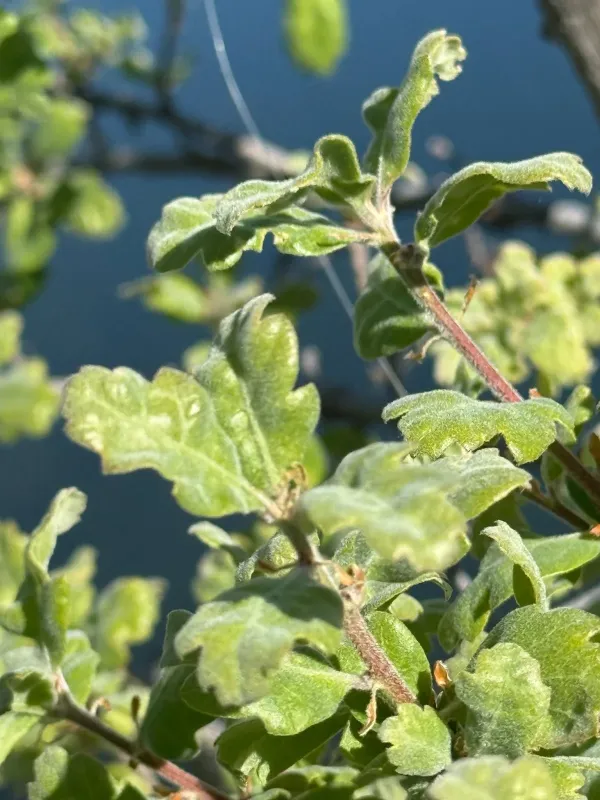
Botanically, it is identified by its deciduous, blue-green foliage and relatively slow growth rate. Its root system is deeply penetrating, which is a key adaptation for surviving long periods of summer water scarcity.
In terms of agricultural and forestry use, it serves as a valuable resource for watershed protection and reforestation in arid zones. Its wood is dense and hard, though it is primarily utilized locally rather than in large-scale timber industries.
Main diseases and pests
Fungal diseases related to poor soil drainage are the most frequent health issues affecting Blue Oak populations in managed landscapes.
Various insect pests, such as gall wasps, inhabit the leaves. While they create visible deformities, they typically do not threaten the life of a mature tree.
Powdery mildew is a common concern during springs with higher than average humidity, requiring careful site selection to ensure proper airflow.
Acorn predation by weevils represents a significant threat to natural regeneration, impacting the viability of seeds collected for nursery propagation.
Anthropogenic pressure and fire frequency are the main external threats, as young saplings are highly vulnerable before they develop mature protective bark.