
Chihuahuan oak
Quercus chihuahuensis
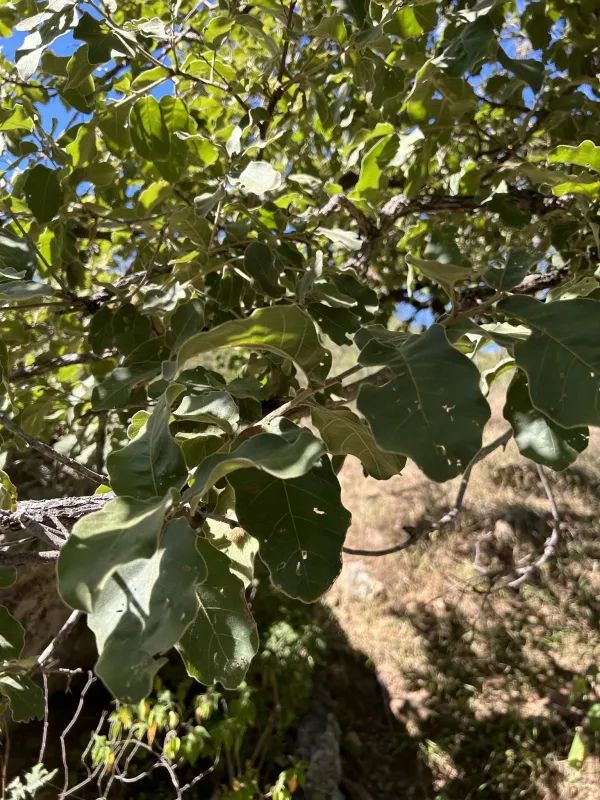
Description
Sowing dates
Propagation of the Chihuahuan oak is primarily achieved through seeds collected during the autumn maturity phase. The acorns should be harvested when they reach their full developmental stage to ensure the highest germination potential.
Before sowing, seeds must undergo a stratification process under cool conditions to break dormancy. This mimics natural environmental cycles and ensures uniform germination when the acorns are planted in spring.
Planting depth is critical and should range between 5 and 8 centimeters to prevent desiccation. Sowing in nursery beds allows for controlled monitoring of moisture levels, which is essential for successful seedling establishment.
Young seedlings require protection from aggressive weed competition during their first two years. Since the plant invests significantly in developing a deep taproot, minimizing nutrient competition in the early stages is vital.
Adequate soil preparation, including the incorporation of mineral drainage materials, is recommended for nursery beds. This prevents fungal issues associated with stagnant water during the initial growth phase.
Growing requirements
The Chihuahuan oak (Quercus chihuahuensis) is a hardy deciduous tree belonging to the Fagaceae family, native to the arid mountainous regions of northern Mexico. It is specifically adapted to survive in harsh, drought-prone environments.
The species thrives in well-drained, stony soils that mirror its natural rocky habitat. It is highly intolerant of waterlogged conditions, making proper site selection a fundamental requirement for successful forestry or landscape use.
High light exposure is essential for this oak, as it is not a shade-tolerant species. It requires full sun for optimal photosynthesis and canopy development, ensuring it reaches its natural form without becoming spindly.
The Chihuahuan oak is well-suited to neutral to slightly alkaline soil pH levels. It does not require high levels of soil fertility, as it is biologically optimized to thrive in the lean, nutrient-poor conditions of its native arid range.
This tree shows remarkable resilience to significant diurnal temperature fluctuations. While it can withstand cold spells typical of high-altitude environments, it remains highly sensitive to humidity levels, preferring a dry climate.
Main diseases and pests
Fungal pathogens are the primary biological threat to the Chihuahuan oak, particularly when exposed to excessive atmospheric moisture. These infections can manifest as leaf spots or powdery mildew, which require prompt management.
Insect pests, including various leaf-chewing larvae and wood-boring beetles, can cause significant damage to the canopy and structural health of the tree. Implementing an integrated pest management strategy is highly recommended.
Root rot caused by poor soil drainage represents a major physiological threat. If the soil remains saturated for extended periods, the root system fails, often leading to rapid decline and mortality of the individual tree.
Nutritional imbalances, often appearing as chlorosis in leaves, can occur if the soil structure prevents the uptake of essential micronutrients. Regular soil testing helps in adjusting nutrient profiles before severe deficiency symptoms emerge.
Mechanical damage to the bark, whether from animals or equipment, serves as an entry point for disease and decay organisms. Proper fencing and careful maintenance around the base of the tree help mitigate these risks effectively.