
Chestnut-leaved oak
Quercus castaneifolia
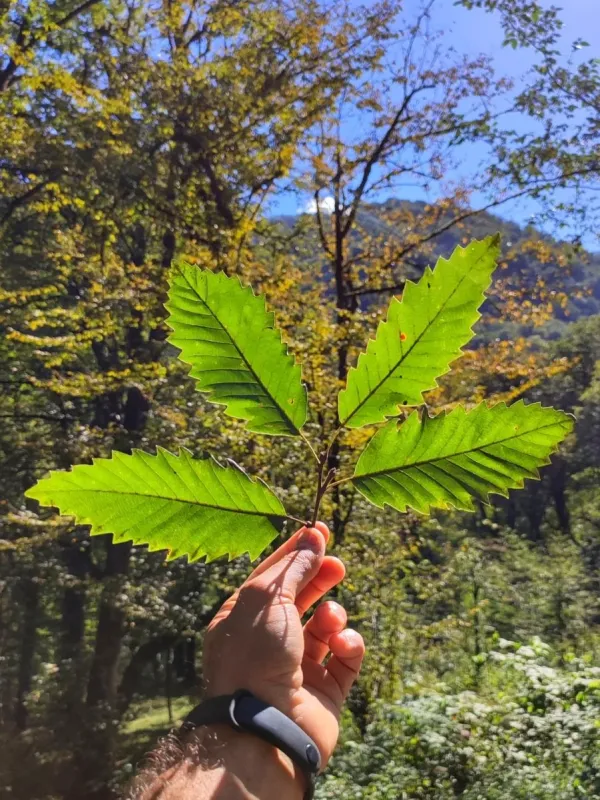
Description
Sowing dates
Propagating the chestnut-leaved oak (Quercus castaneifolia) via seeds requires proper stratification, as acorns lose viability quickly if allowed to dry out. Sowing is best performed in late autumn, immediately after collection, to take advantage of natural winter conditions.
If planting in spring, seeds should be sown as early as possible after the soil thaws. The planting depth for acorns is typically between 5 and 8 centimeters, depending on the soil texture and the risk of surface drying.
For commercial forestry, using two-year-old saplings from nurseries is the preferred method to ensure higher survival rates. Healthy saplings with well-developed root systems are essential for successful establishment in the field.
Quality control is vital during the selection of seed material. Only heavy, undamaged acorns should be used to ensure the development of vigorous and healthy trees in the future plantations.
Pre-treatment of seeds, such as short-term soaking in growth-promoting solutions, can significantly enhance germination uniformity. This practice allows for more reliable stand establishment and helps young trees overcome early environmental stress.
Growing requirements
As a member of the Fagaceae family, the chestnut-leaved oak is native to regions of the Caucasus and Northern Iran. It thrives in deep, fertile soils rich in humus and essential mineral nutrients.
The species is moderately shade-tolerant during its juvenile stage but requires full sun exposure to reach its maximum growth potential as it matures. Ample sunlight is crucial for proper crown development and timber formation.
Climatic requirements focus on a temperate environment with sufficient rainfall. The tree is sensitive to extreme frosts and abrupt temperature fluctuations, so sheltered sites are ideal for its development.
Well-drained soil is a non-negotiable requirement, as waterlogged conditions can lead to root decay and decreased tree vigor. Avoid planting on sites prone to stagnant water or areas with high ground-water tables.
Soil pH should ideally be neutral to slightly acidic. Applying organic mulches around the base of the young trees helps maintain soil moisture, suppresses weeds, and adds beneficial nutrients to the root zone.
Yield
The primary economic value of the chestnut-leaved oak lies in its high-quality timber. It is highly valued in carpentry and furniture making due to its density, durability, and attractive grain pattern.
Forestry yields take several decades to realize, as oak is a slow-growing species with a long maturity cycle. Commercial harvest schedules are typically planned well into the future of the forest life cycle.
Beyond timber production, the tree serves significant environmental roles, including carbon sequestration and improving local soil structure. This makes it an excellent choice for reforestation and environmental projects.
Due to its ornamental leaves, which resemble those of a chestnut tree, it is also highly sought after in landscaping and public park design, adding significant value to urban and rural greenspaces.
Acorn production in mature trees is cyclic rather than annual, often resulting in heavy mast years every three to five years. This cycles are critical for local wildlife support within the ecosystem.
Main diseases and pests
Common pests include the acorn weevil, which targets the seed crop, and various leaf-eating insects. Monitoring the health of the foliage and conducting regular sanitary inspections are essential for mitigation.
Fungal pathogens such as powdery mildew can affect the tree, especially in areas with poor airflow and high humidity. Proper site selection and spacing are the first steps in preventing widespread infection.
Root rot diseases are more prevalent in compacted or poorly drained soils. Cultivating the soil around the base of the trees to improve aeration can significantly reduce the risk of these infections.
Protection from herbivorous mammals, such as deer and rodents, is crucial during the first few years of tree growth. Tree guards and physical barriers are often necessary to prevent bark damage and stem browsing.
An integrated pest management (IPM) approach that focuses on preventative measures and biological control is the most sustainable way to protect chestnut-leaved oak stands from potential outbreaks.