
Brant's oak
Quercus brantii
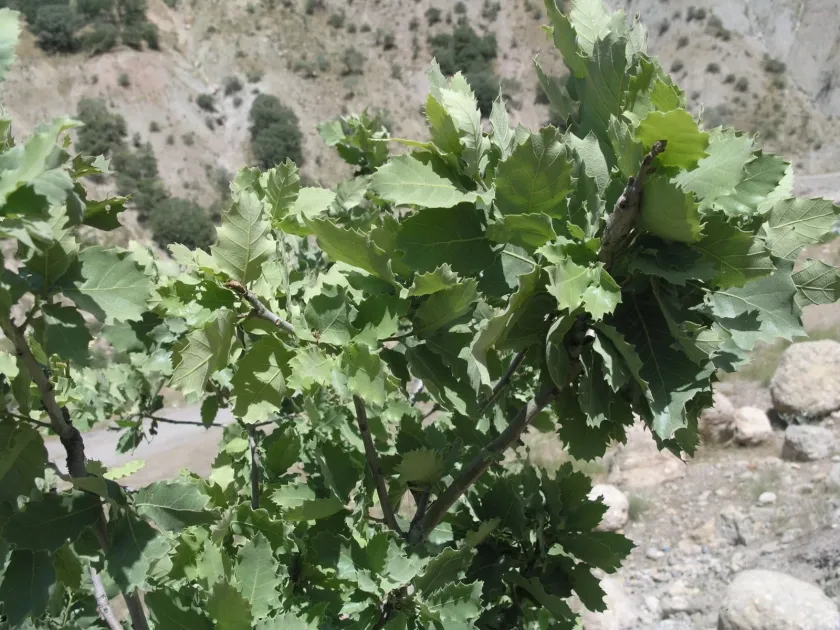
Description
Sowing dates
The sowing of Brant's oak acorns is usually carried out in the autumn, immediately after they mature, ensuring natural seed stratification in the soil.
When spring sowing is preferred, pre-storage of acorns in a cool, moist environment at temperatures between 0 and +2 degrees Celsius is necessary to prevent embryo desiccation.
The optimal planting depth for the seeds is 5–8 centimeters, which protects them from drying out and rodent damage during the early germination stage.
When growing in nurseries, the distance between rows should be at least 50 centimeters to ensure sufficient space for the root system development of seedlings.
A crucial condition for successful sowing is the use of freshly harvested seeds, as Brant's oak acorns quickly lose their viability if moisture levels are not maintained.
Growing requirements
Brant's oak belongs to the Fagaceae family and is a drought-tolerant species adapted to the harsh conditions of high-altitude regions in Western Asia.
The crop prefers well-drained rocky or loamy soils, demonstrating high resistance to low nutrient content and alkaline soil reaction.
For normal development, the tree requires high insolation, as it is a light-demanding species that struggles in dense plantings during its early years.
The optimal temperature range for growth is +15 to +30 degrees Celsius, though the species is capable of withstanding significant daily temperature fluctuations.
The groundwater level must be sufficient to support taproot development, although the plant has a marked ability to survive prolonged soil and atmospheric drought.
Yield
The yield of Brant's oak acorns depends on the tree age and specific climatic conditions, often characterized by cyclical productivity patterns.
A mature tree can produce up to 15–25 kilograms of acorns in a favorable year, which are used as livestock feed or for food after processing.
Economic utility includes the harvesting of tannins from the bark and fruits, making the crop a valuable raw material for the tanning and pharmaceutical industries.
Acorns contain significant amounts of starch and protein, which defines their value as a byproduct in integrated forestry management systems.
To increase yields, it is recommended to perform sanitary pruning and remove dead branches, which stimulates the formation of generative buds in the following season.
Main diseases and pests
The primary pests of Brant's oak include weevils and acorn moths, which can damage up to 60% of the fruit harvest if preventive measures are not taken.
In high-humidity conditions, seedlings are susceptible to fungal diseases such as powdery mildew, which causes leaf deformation and premature shedding.
Root rot poses a danger in waterlogged areas, making the selection of a planting site critical for the prevention of these pathologies.
Mass outbreaks of leaf-eating insects in drought years can weaken the trees and lead to secondary infestations by wood-boring pests.
- Regular monitoring of plantations
- Application of biological insect control
- Sanitary removal of infected trees
- Monitoring bark condition
- Maintaining optimal planting density
Harvesting
Acorn harvesting is carried out manually in late autumn when the fruits acquire their characteristic brown color and begin natural abscission.
It is important to harvest promptly to minimize contact between the acorns and moist soil, which prevents mold development and premature germination.
After harvesting, the fruits undergo primary cleaning to remove impurities and are dried in a shaded, well-ventilated area to stabilize moisture levels for storage.
For industrial use, bark is harvested during the sap flow period using selective pruning to ensure the tree remains healthy and does not suffer lethal damage.
Sorting the harvest by size and weight allows for the separation of high-quality seeds suitable for propagation from material intended for fodder purposes.