
Scrub oak
Quercus berberidifolia
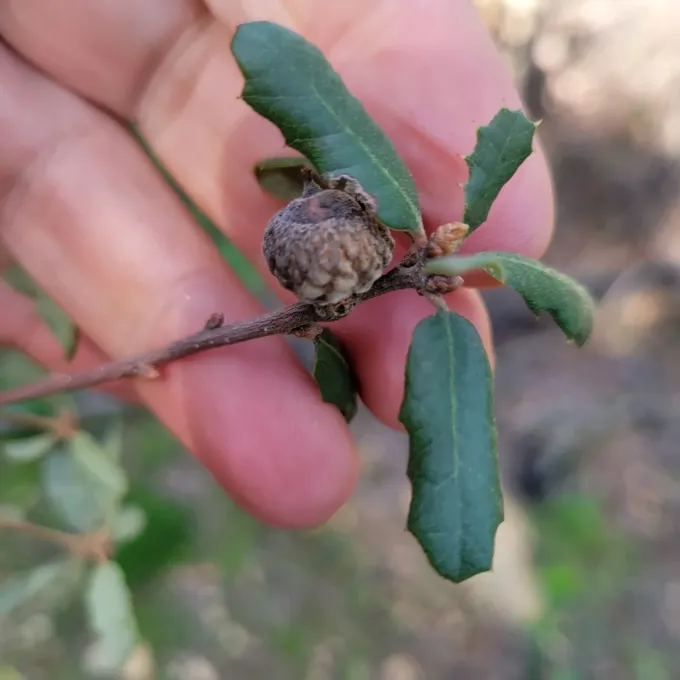
Description
Growing requirements
The Scrub oak (Quercus berberidifolia) is an evergreen shrub species belonging to the Fagaceae family. It is a defining component of the California chaparral plant communities, typically reaching a modest size of up to 4 meters.
This species is native to the coastal ranges of California and parts of Baja California. It thrives in Mediterranean climates characterized by long, dry, hot summers and cool, wet winter periods.
Regarding soil requirements, the scrub oak is highly specialized. It prefers well-draining, rocky, or sandy soils and is remarkably intolerant of heavy, waterlogged substrates that inhibit root respiration.
The plant is exceptionally drought-tolerant. Its physiological adaptations allow it to survive in arid conditions where other species might fail, making it a valuable candidate for xeriscaping.
Full sun exposure is vital for the health of Quercus berberidifolia. In cultivation, it requires adequate spacing to prevent excessive humidity around the foliage and to ensure maximum sunlight penetration.
Main diseases and pests
The most significant threat to the health of the scrub oak is root rot caused by fungal pathogens such as Phytophthora, which thrive in poorly drained soil environments.
Powdery mildew represents a common foliage disease, especially during periods of high humidity and limited air movement around the shrub canopy.
Pest populations typically include oak gall wasps. These insects cause abnormal growths on leaves and twigs, which, while aesthetically displeasing, rarely threaten the life of the plant.
Leaf miners can occasionally cause damage to foliage. In healthy, well-managed shrubs, these infestations are usually self-limiting and do not require chemical intervention.
Environmental stress, such as prolonged drought combined with fire suppression, can lead to the decline of stands. Fire is a natural part of its lifecycle, promoting regeneration.