
Aucher oak
Quercus aucheri
Description
Growing requirements
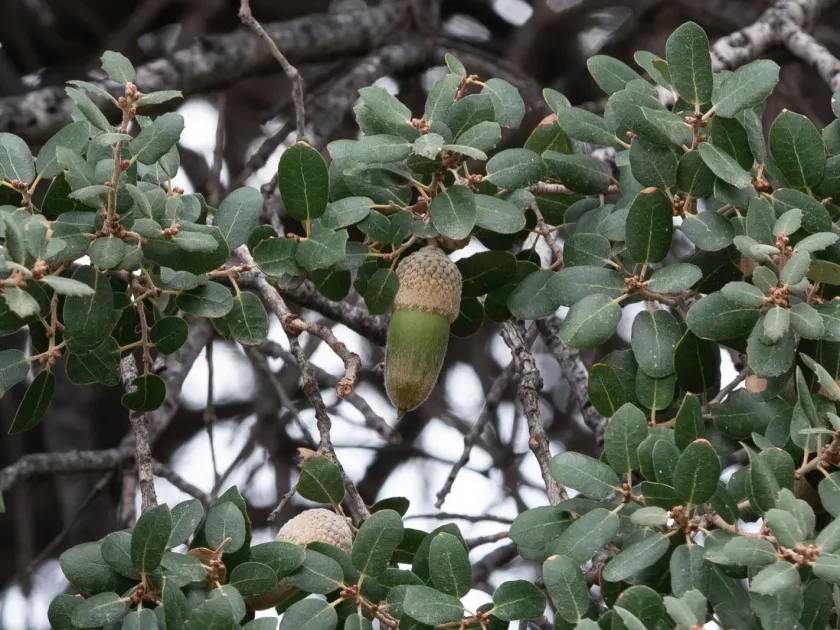
The Aucher oak (Quercus aucheri) is a distinctive evergreen species belonging to the Fagaceae family. It grows as a small-to-medium sized tree or a large shrub, characterized by slow growth and high adaptability to its natural habitat.
The native range of this species is confined to the Eastern Mediterranean, specifically occurring along the coastal regions of Turkey and certain Greek islands. It thrives in regions with hot, dry summers and mild winters.
Regarding soil, Quercus aucheri prefers well-drained, rocky, or limestone-rich substrates. It is highly tolerant of poor soil fertility, which makes it a valuable candidate for afforestation and land rehabilitation projects in Mediterranean environments.
This oak requires full sun exposure to maintain its density and health. Once established, it exhibits remarkable drought tolerance, which reduces the need for supplemental irrigation in arid landscapes after the initial growth period.
Economically, it is valued primarily for its ornamental use and its role in ecosystem stabilization. The dense, evergreen foliage provides excellent windbreaks and serves as a shelter for various local fauna species.
Main diseases and pests
Powdery mildew is a primary concern for the Aucher oak, especially when humidity levels remain high for extended periods. Maintaining proper spacing and air ventilation between trees is essential for prevention.
Pests such as various leaf-mining insects and wood-boring beetles can cause structural damage. Regular inspections of the bark and leaves are recommended to detect infestations at an early stage and apply targeted treatments.
Root rot, often caused by waterlogging, is a significant threat to young specimens. Ensuring that the planting site has excellent drainage is the most effective management strategy against these pathogens.
Frost sensitivity limits its expansion into northern latitudes. In regions prone to occasional cold snaps, young trees should be protected with organic mulch to insulate the root system from freezing temperatures.
In addition to these factors, mechanical damage from storms can lead to secondary infections. Proper pruning techniques should be employed to remove broken branches and help the plant maintain its natural vigor.