
Arizona white oak
Quercus arizonica
Description
Sowing dates
Propagation of the Arizona white oak is primarily achieved through acorns, which should be collected immediately after they drop in the autumn season.
Fresh acorns are highly sensitive to desiccation, so they must be planted promptly or stored in a cool, moist medium to maintain their viability.
Sowing in a nursery environment involves planting the acorns at a depth of 3 to 5 centimeters in well-drained, porous soil mixtures.
If sowing is delayed until spring, cold stratification is necessary to break dormancy and ensure a uniform germination rate among the seedlings.
Young plants should be kept in well-aerated containers with excellent drainage, as the root systems are prone to rot under stagnant moisture conditions.
Growing requirements
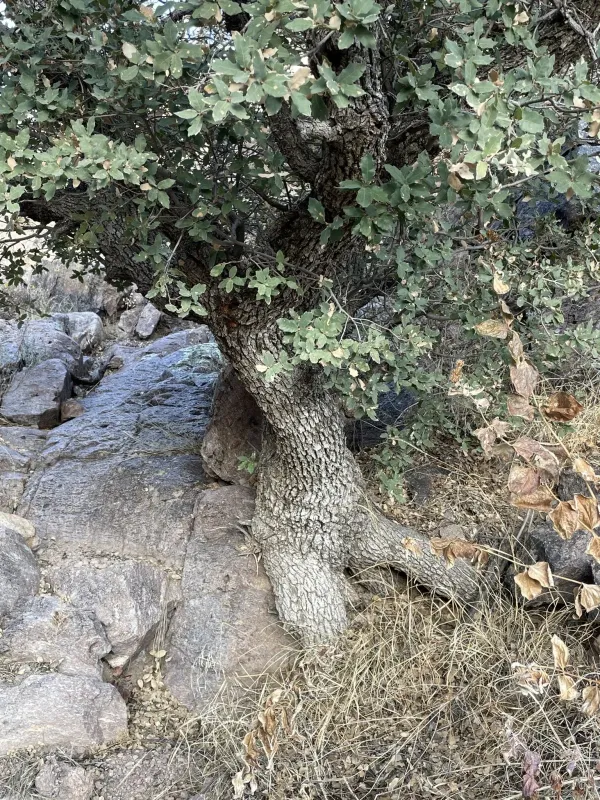
Quercus arizonica, belonging to the Fagaceae family, is an iconic evergreen tree native to the high-elevation arid regions of the southwestern United States and Mexico.
This species is highly adapted to rocky, coarse-textured soils and thrives in environments where water availability is periodic or limited.
Full sun exposure is a critical requirement for this species, as it naturally occurs on dry ridges and slopes where canopy competition is minimal.
The tree exhibits significant drought tolerance once established, though initial supplemental irrigation is beneficial for young saplings during the first growing season.
While hardy, the species prefers climates with mild winters, as severe, prolonged freezing temperatures can impact the structural integrity of young branches.
Main diseases and pests
The primary threats include various root rot pathogens that proliferate in heavy, waterlogged soils, directly compromising the tree's vascular system.
Foliar insects, such as leafminers and certain caterpillars, can cause significant cosmetic damage and reduce the overall photosynthetic capacity of the tree.
Wood-boring beetles present a lethal threat to weakened trees, necessitating proper sanitation and the removal of deadwood to prevent localized infestations.
Mistletoe infestation is common in natural populations and can slowly weaken mature trees, making them susceptible to further secondary infections.
Effective management strategies should include monitoring for signs of wilt and ensuring optimal site drainage to prevent the development of fungal diseases.