
Quercus argentata
Quercus argentata
Description
Growing requirements
Quercus argentata is a significant evergreen tree species belonging to the Fagaceae family. Unlike temperate oaks, this species is uniquely adapted to the humid, tropical environments found across Southeast Asia, including Malaysia and Borneo.
The tree thrives in regions characterized by high annual precipitation and constant temperatures. Its natural distribution is primarily confined to primary tropical rainforests, where it occupies middle-elevation strata within the complex canopy structure.
Regarding soil requirements, this species favors deep, nutrient-rich, and well-drained soil substrates. It is highly sensitive to soil compaction and waterlogging, requiring specific edaphic conditions to maintain its structural integrity and health.
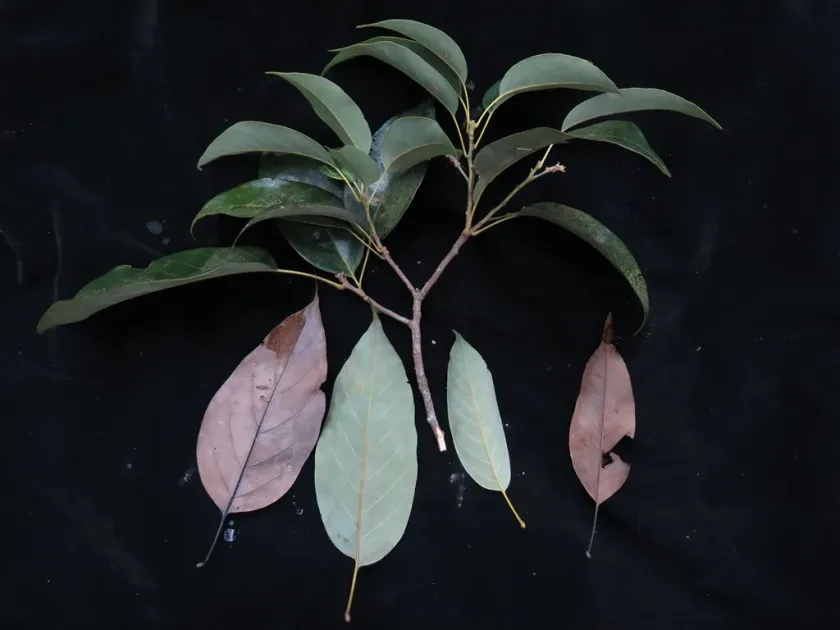
Botanically, the species is named for the distinct silvery-grey appearance of the underside of its leaves. These leaves possess a tough, leathery texture, an evolutionary adaptation designed to withstand heavy rainfall and maintain efficiency under high humidity.
In terms of practical use, the timber from Quercus argentata is valued for its density and durability. However, due to its slow maturation rate and the degradation of its native rainforest habitat, current efforts are heavily focused on sustainable forest management and botanical conservation.