
Coast live oak
Quercus agrifolia
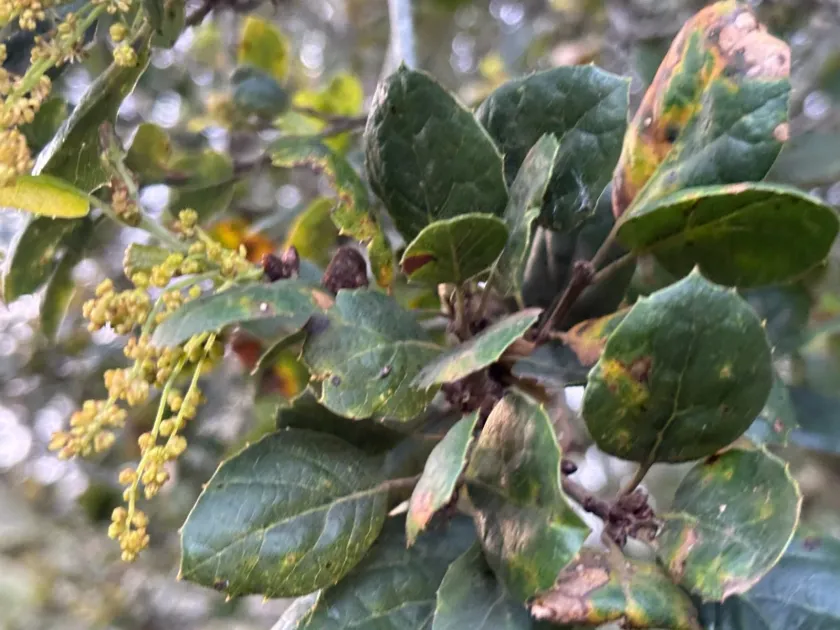
Description
Sowing dates
Propagating the coast live oak is best achieved through direct sowing of acorns immediately after they fall in autumn. Acorns lose viability rapidly when dried out, so maintaining a slight moisture level until planting is essential for successful germination.
When planting, acorns should be placed on their sides about 3–5 centimeters deep in well-draining soil. This orientation helps the radicle emerge more easily and prevents potential rot that can occur if the seed is waterlogged.
If starting in containers, deep pots are mandatory to accommodate the rapidly growing taproot. Any restriction of the taproot can permanently stunt the growth of the tree, making container selection a critical first step in cultivation.
Transplanting seedlings should be done with extreme care, as the roots are fragile and do not respond well to disturbance. Ideally, trees should be planted in their final destination while still young to ensure the taproot establishes firmly in the native soil.
Protection from squirrels and other herbivores is necessary during the initial sowing stage. Using wire cages or protective tubes helps keep the seeds safe until the seedlings are large enough to withstand moderate browsing.
Growing requirements
Quercus agrifolia is a broad-leaved evergreen tree native to the coastal regions of California. As a member of the Fagaceae family, it is perfectly adapted to the Mediterranean climate, characterized by cool, wet winters and warm, dry summers.
The species is remarkably drought-tolerant once established, thanks to its deep taproot system. It thrives in a variety of soil types, from sandy loams to rocky hillsides, provided there is excellent drainage to prevent root diseases.
This oak is highly tolerant of salty ocean spray and fog, which explains its common name. It serves as a vital component of the local ecosystem, providing shade, food, and habitat for a vast array of wildlife species.
Optimal growth occurs in areas with full sun to partial shade. While it can tolerate some level of shade when young, the coast live oak eventually requires significant light exposure to maintain its dense, spreading canopy structure.
Soil pH preference is generally slightly acidic to neutral. In agriculture and landscaping, it is essential not to irrigate beneath the tree canopy in summer, as moist soil combined with heat promotes the growth of lethal pathogens.
Main diseases and pests
Sudden Oak Death (SOD), caused by the pathogen Phytophthora ramorum, is the most severe threat to Quercus agrifolia. This water mold causes cankers on the bark, which can eventually lead to the rapid decline and death of mature trees.
Oak gall wasps are common pests that create distinctive swellings on leaves and twigs. While usually not fatal, heavy infestations can reduce the tree's vigor and negatively impact its overall aesthetic and health.
Various defoliating caterpillars can cause significant leaf loss in spring. Integrated pest management strategies are recommended to monitor populations and prevent excessive damage during the active growing season.
Root rot, particularly caused by Armillaria species, is a significant threat when soil moisture is managed incorrectly. The presence of excessive mulch or irrigation near the trunk often triggers these fungal issues.
Mechanical damage to the trunk or branches serves as an entry point for wood-boring insects and decay fungi. Proper pruning techniques, which avoid leaving large stubs or stripping bark, are essential for tree longevity.