
Affine oak
Quercus affinis
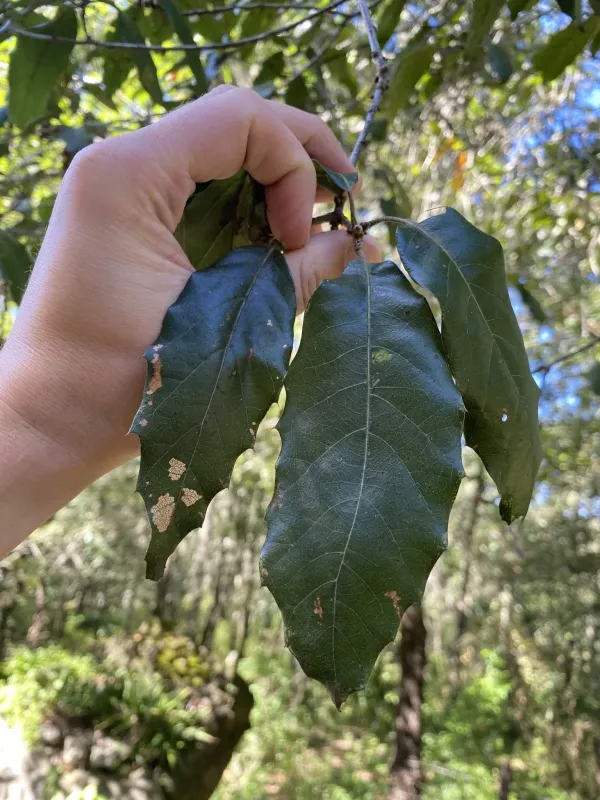
Description
Sowing dates
Propagation of Quercus affinis in forest nurseries is primarily carried out by seed. Sowing of mature acorns is performed in the autumn, immediately after collection, or in early spring following stratification in cool, moist conditions.
The planting depth of seeds ranges from 5 to 8 centimeters, depending on the soil texture. It is crucial to ensure optimal sowing density to prevent competition among young seedlings during their early years.
To accelerate germination and protect against pathogens, acorns must undergo fungicide treatment before sowing. When grown in containers, adequate drainage is provided to prevent root rot.
Transplanting young trees to their permanent site is recommended at the age of 2–3 years when the root system is sufficiently developed. Autumn planting is preferred in regions with a mild climate, while spring planting is better in areas prone to severe winter frosts.
The first years of the culture require regular maintenance, including weeding the inter-rows and protecting against weed vegetation that may inhibit the growth of seedlings.
Growing requirements
The affine oak (Quercus affinis) belongs to the Fagaceae family and is native to the mountain forests of Mexico. The culture prefers a moderately humid climate and well-drained substrates.
Optimal conditions for vegetation include high-altitude areas with sufficient rainfall where temperatures do not drop to extreme frost levels. The tree is characterized by high aesthetic value and the ability to adapt to rocky soils.
The soil should have a neutral or slightly acidic reaction. It is important to avoid areas with stagnant water, as the oak's root system is very sensitive to excessive moisture and anaerobic conditions.
The species requires sufficient bright light in the early stages, although in natural conditions, it often grows as part of mixed forest ecosystems. It tolerates partial shade well in the first years of growth.
For successful cultivation, microclimatic features of the plot must be considered, avoiding exposed windy slopes that can cause desiccation of leaves during the summer period.
Yield
The economic use of the affine oak focuses on obtaining high-quality wood, which is valued in woodworking. Biomass growth rates depend on the growing conditions.
In industrial forest plantations, main harvesting is conducted when the trees reach commercial size, which may take from 40 to 80 years depending on the intensity of management.
In addition to timber, the fruits (acorns) have value as a feed base for wildlife or as a component of forest ecosystems to maintain biodiversity.
The productivity of plantations is determined by planting density. Modern forestry methods allow for increased yield of commercial timber through proper crown formation and timely thinning.
Acorn yield is periodic, which is typical for Quercus species, although with proper maintenance, fruiting becomes more stable.
Main diseases and pests
The main threats to the culture are fungal diseases of the bark and leaves, such as powdery mildew and various forms of anthracnose, which affect weakened trees.
Pests, including stem borers and leaf-eating insects, can cause significant damage to young plantations, requiring preventative insecticide treatments.
Root rot, arising from improper agricultural practices and excessive watering, poses a serious risk to the health of the oak, leading to premature seedling death.
Climate change and drought periods facilitate the spread of secondary pests, which weaken the plant's immunity and make it vulnerable to secondary infections.
- Prevention through sanitary pruning of affected branches.
- Monitoring bark condition for insect holes.
- Maintaining optimal water balance in the soil.
Harvesting
Harvesting of seed material (acorns) is carried out during the period of full biological maturity when the pericarp acquires its characteristic color and the fruit easily separates from the cupule.
For logging, selective cutting or clear-cutting methods are used according to the forest management plan, ensuring the regeneration of the forest area.
Affine oak timber requires long-term drying after felling to prevent cracking and warping, which is an important stage of primary material processing.
Storage of collected acorns until sowing is performed in specialized cool rooms with controlled humidity to preserve the viability of the embryo.
The timber harvesting process requires the use of modern machinery to minimize damage to neighboring growing trees and preserve the integrity of the soil cover.