
Moesian beech
Fagus moesiaca
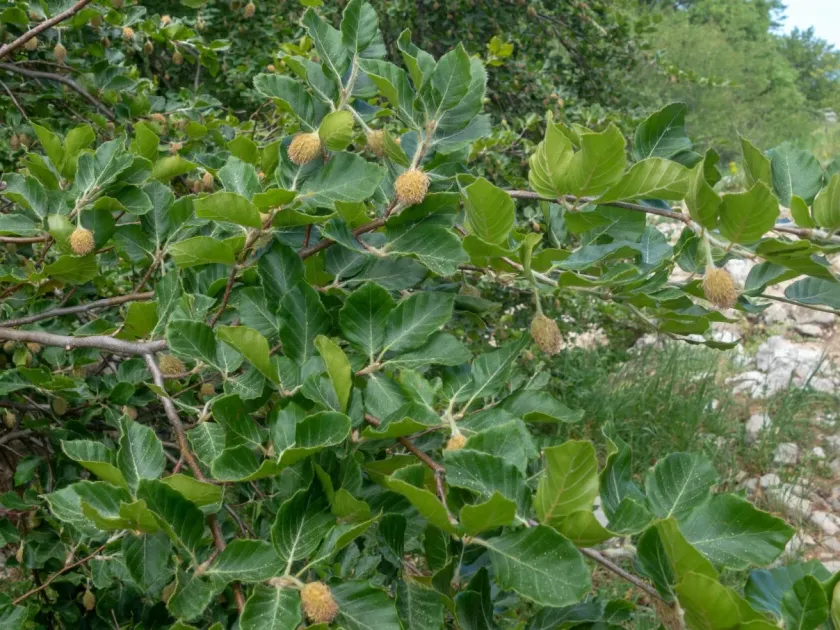
Description
Sowing dates
The propagation of Moesian beech is mainly achieved through seeds. For successful cultivation, it is recommended to collect nuts in autumn and sow them immediately to mimic natural dormancy.
If spring sowing is preferred, seeds must undergo cold stratification at temperatures between 0 and 5 degrees Celsius for approximately three to four months to break dormancy.
Seeds should be sown in well-drained, fertile soil at a depth of 3 to 5 centimeters, ensuring the site is protected from harsh drying winds during the germination phase.
Young seedlings are highly sensitive to intense direct sunlight and require partial shade during their early development years to thrive and establish roots.
Transplanting nursery-grown trees to their final location is best performed when seedlings are 3 to 5 years old, as they are then better equipped to withstand environmental stress.
Growing requirements
Moesian beech, a member of the Fagaceae family, is a valuable forest tree species naturally occurring in the mountainous regions of the Balkan Peninsula.
The culture requires deep, nutrient-rich, and well-drained loamy soils that maintain consistent moisture levels without becoming waterlogged or prone to compaction.
This species thrives in a temperate, humid climate, demonstrating significant shade tolerance, which allows it to form dense, productive secondary canopy layers.
Environmental stability is crucial, as Moesian beech is sensitive to extreme temperature fluctuations and late spring frosts that can damage developing buds and foliage.
Optimal site selection must prioritize areas with sufficient air humidity and protection from extreme physiological drought to ensure healthy growth rates.
Yield
In silviculture, Moesian beech is prized for its high-quality timber, characterized by its density, uniform texture, and excellent machining properties for woodworking.
The wood is extensively utilized in the manufacturing of high-end furniture, parquet flooring, musical instruments, and diverse architectural elements.
Productivity is managed through long-term thinning strategies, which allow the best specimens to attain significant dimensions, maximizing both wood quality and biomass.
Beech nuts serve as a vital food source for local wildlife populations, making the species an essential component of forest biodiversity and game management.
Successful timber production requires careful management of stand density, which influences both the growth rate of individual trees and the quality of the raw material.
Main diseases and pests
The primary threats to Moesian beech forests include various fungal diseases, such as bark necrosis and root rot, often triggered by water stress or soil compaction.
Defoliating insects and wood-boring beetles pose significant risks to the overall health and vigor of the trees, especially when they are already stressed by environmental changes.
Pests like aphids can cause cosmetic damage and reduce growth in young stands, requiring integrated pest management strategies to maintain plantation health.
Effective management involves consistent forest monitoring and the rapid removal of diseased or deadwood to prevent the spread of pathogens throughout the stand.
- Sanitary thinning and removal of infected wood
- Regular monitoring for signs of infestation
- Maintaining soil moisture through proper mulching
- Protection of young trees from browsing mammals
- Application of certified forestry management practices