
Bush chinquapin
Chrysolepis sempervirens
Description
Growing requirements
The bush chinquapin (Chrysolepis sempervirens) is a woody shrub belonging to the Fagaceae family, native to the western United States. It is commonly found in the mountainous ranges of California and Oregon.
This species is highly adapted to arid and semi-arid conditions, thriving on dry, rocky slopes. It grows well in Mediterranean climates with distinct wet and dry seasonal patterns.
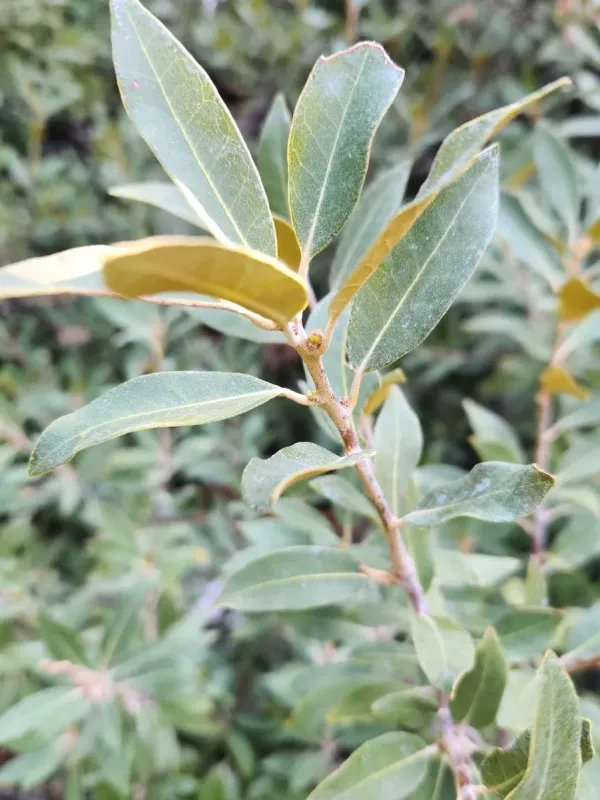
Botanically, it is recognized for its dense, evergreen foliage. The leaves have a tough, leathery texture and a unique golden tomentum on the underside, which provides protection against moisture loss.
In terms of land use, it is valued in native landscaping and ecosystem restoration. Its ability to stabilize soil on slopes makes it a functional plant for erosion control in challenging terrain.
Cultivation requires minimal intervention. The plants prefer acidic, rocky soils with excellent drainage, making them suitable for rock gardens where water stagnation must be avoided.
Main diseases and pests
The primary threats to the bush chinquapin include root rot pathogens when grown in poorly drained soils. Excess moisture is lethal to its natural adaptation to rocky habitats.
Seed-boring insects often impact natural propagation by attacking the developing nuts. This predation limits the viability of seeds for nursery purposes without proper pest management.
Fungal leaf diseases can emerge in environments with stagnant air and high humidity. Providing adequate air circulation is essential for the health of specimens grown in gardens.
Wildfire is a critical ecological factor. While the plant can sprout from root crowns after fire, extreme heat may damage young specimens, requiring careful protection of mature stands.
Nutrient deficiencies, particularly regarding trace elements in high-pH soils, can manifest as foliage chlorosis. Maintaining the appropriate soil acidity is vital for optimal growth.