
Castanopsis tribuloides
Castanopsis tribuloides
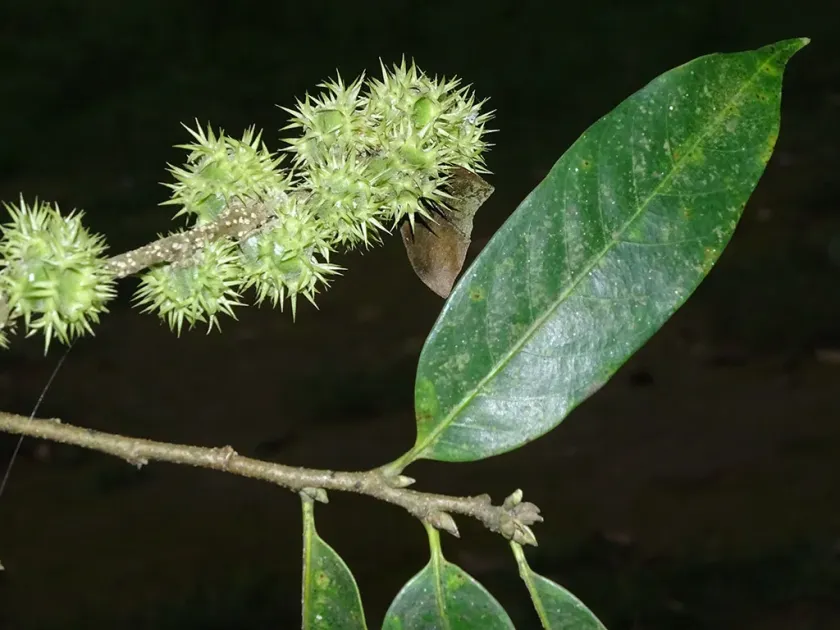
Description
Growing requirements
Castanopsis tribuloides is a prominent member of the Fagaceae family, widely recognized for its evergreen foliage and hard, durable wood. Native to the Himalayan region and Southeast Asia, this tree thrives in mountainous ecosystems ranging from tropical to subtropical zones.
Successful cultivation requires a deep, fertile, and well-drained soil profile with a slightly acidic pH level. As a moisture-loving species, it performs best in regions with significant annual rainfall and consistent air humidity, avoiding any instances of waterlogging.
The tree prefers shaded or semi-shaded environments during its early growth stages. It is highly sensitive to extreme frost, necessitating protection in colder climates to prevent damage to the terminal buds and young branches.
Agricultural practices for this crop focus on soil health through regular organic matter integration, such as leaf mold or compost. Proper spacing is essential to ensure adequate airflow and light penetration, which helps mitigate the risk of fungal infections in dense canopy layers.
Beyond its ecological role, the species is valued for its hard timber used in carpentry and construction. Its fruits serve as a supplemental food source, making it a multifaceted crop for agroforestry projects aiming for biodiversity and sustainability.
Harvesting
The harvest period for Castanopsis tribuloides occurs in the autumn months as the fruits reach full maturity. At this stage, the spiny husks surrounding the nuts naturally split open, signaling that the crop is ready for collection.
Manual harvesting is the standard method, requiring careful handling due to the prickly nature of the fruit husks. Collectors typically gather the fallen nuts from beneath the tree canopy or gently shake the branches to release the matured fruits.
Post-harvest processing is crucial to ensure the longevity of the nuts. The collected crop must be immediately sorted to remove debris and infested nuts, followed by a thorough drying process in a well-ventilated area to prevent decay.
Storage facilities should maintain low humidity levels to protect the kernel quality. Proper drying ensures that the nut remains shelf-stable, making it suitable for both culinary applications and regional trade markets.
Systematic monitoring of the trees during the development phase can significantly enhance yield consistency. Proper orchard management, including periodic canopy thinning, facilitates easier harvesting and promotes healthier fruit production cycles.