
Indian chestnut
Castanopsis indica
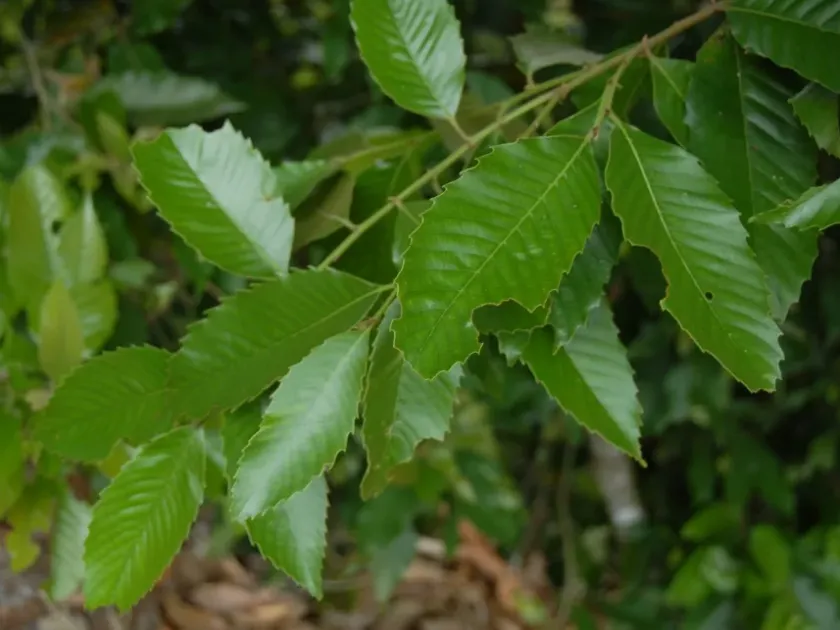
Description
Growing requirements
Castanopsis indica, commonly known as the Indian chestnut, is an evergreen tree species belonging to the Fagaceae family. Native to the Himalayan region and Southeast Asia, it is highly valued for both its edible nuts and its ecological contributions to mountain forests.
The tree thrives in humid, subtropical climates with well-distributed annual rainfall. It prefers deep, nutrient-rich, acidic to neutral soils with excellent drainage. Waterlogged conditions are detrimental to root health and must be avoided through site selection or artificial contouring.
Temperature requirements are relatively moderate, as the species does not tolerate extreme frost or harsh arid conditions. In its juvenile stage, the plant exhibits significant shade tolerance, allowing it to grow under the canopy, though mature trees require full sunlight for optimal nut production.
Agronomic practices for this culture focus on protecting the surface root system. Organic mulching is essential to maintain soil moisture levels and suppress weed competition during the establishment phase of the orchard.
Besides agricultural interest, the tree plays a vital role in reforestation efforts. Its dense canopy and robust root system help stabilize steep slopes, preventing soil erosion in mountainous terrain where it is typically cultivated.
Main diseases and pests
Root rot caused by various fungal pathogens is the primary threat to Indian chestnut plantations, particularly in areas with insufficient soil drainage. Careful monitoring of water runoff is essential for long-term health.
Nut weevils are the most significant insect pests. These beetles bore into the developing fruits, causing damage that renders the nuts unmarketable. Integrated pest management strategies, including the removal of infested fruits, are recommended.
Foliar diseases, such as powdery mildew, can affect trees in high-humidity environments with poor air circulation. Pruning strategies should prioritize opening the crown to ensure adequate airflow and sunlight penetration.
Scale insects and aphids may occasionally infest young shoots, causing stunted growth. While mature trees are generally resilient, young plantations require consistent monitoring for early signs of infestation.
Sustainability in management relies on biological control methods, such as encouraging beneficial predatory insects, to minimize the use of chemical pesticides in orchards that produce edible goods.
Harvesting
The harvest season for Castanopsis indica typically occurs in late autumn. Harvesting begins when the spiny burs containing the nuts start to dehisce naturally on the branches, indicating maturity.
Mechanical harvesting is generally impractical due to the topography of the land, so hand-harvesting or carefully shaking the branches is preferred. Care must be taken to protect workers from the sharp spines of the fruit hulls.
Post-harvest processing involves removing the tough, spiny outer husk to access the edible nut. Once cleaned, the nuts must be thoroughly dried in well-ventilated areas to prevent mold growth and improve shelf life.
Quality control during sorting is crucial. Nuts are classified by size and surface integrity, removing any that show signs of pest tunneling or physical damage that might invite decay during storage.
Proper storage involves keeping the nuts in a cool, dry place. Using breathable containers like mesh bags helps maintain the necessary air exchange, ensuring the produce remains fresh for several months post-harvest.