
Chinese chinkapin
Castanopsis chinensis
Description
Growing requirements
Chinese chinkapin (Castanopsis chinensis) is an evergreen tree species belonging to the Fagaceae family. It is native to the subtropical regions of Southern China, where it thrives in humid forest ecosystems as a dominant or co-dominant canopy tree.
The tree requires a specific subtropical climate characterized by warm temperatures and high humidity levels throughout the year. It lacks cold hardiness and struggles to survive in regions with frequent frost or extreme drops in winter temperatures, limiting its cultivation to specific zones.
Regarding soil requirements, this species prefers deep, well-drained, and acidic soils rich in organic matter. While it is adaptable to various slopes, it performs exceptionally well on well-aerated forest soils that prevent waterlogging and promote deep root development.
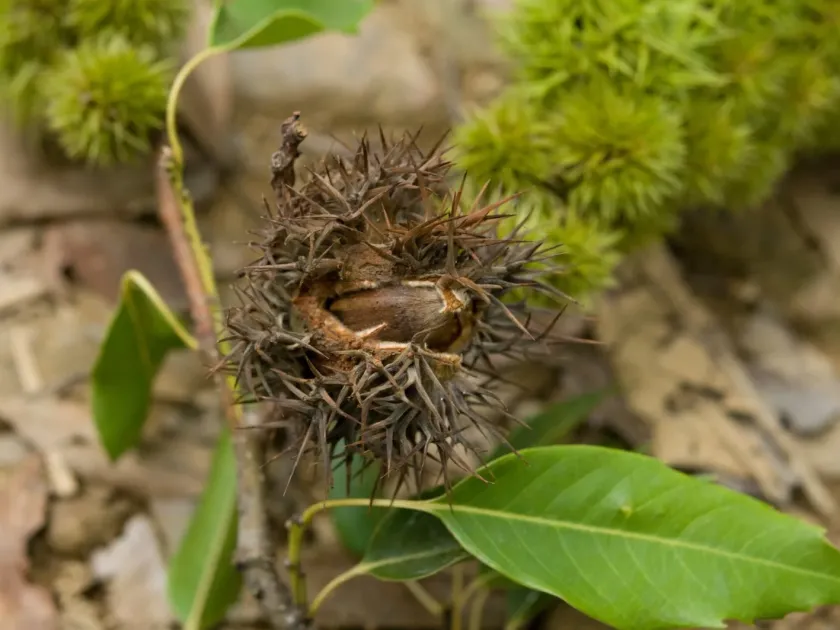
Botanically, it is a robust evergreen tree with coriaceous, glossy leaves that assist in moisture retention. The tree produces small, edible nuts enclosed in woody, spiky involucres (cups), which serve as both food sources for local wildlife and traditional snacks for human consumption.
Economic utility of the species is focused on both timber production and harvesting of nuts. The wood is known for its density and durability, making it suitable for high-quality construction and tool handles, while the nuts contribute to local agricultural diversity.
Main diseases and pests
The primary threats to Castanopsis chinensis populations include fungal pathogens that exploit high-humidity environments. Leaf blights and stem cankers are prevalent in dense stands where air circulation is limited, potentially weakening the trees' structure.
Insect pests represent another significant factor in crop and timber loss. Borers and weevils often target the tree trunk and ripening nuts, respectively. Regular monitoring and integrated pest management are necessary to maintain healthy forest stands and ensure stable nut production.