
Terminalia ivorensis
Terminalia ivorensis A. Chev.
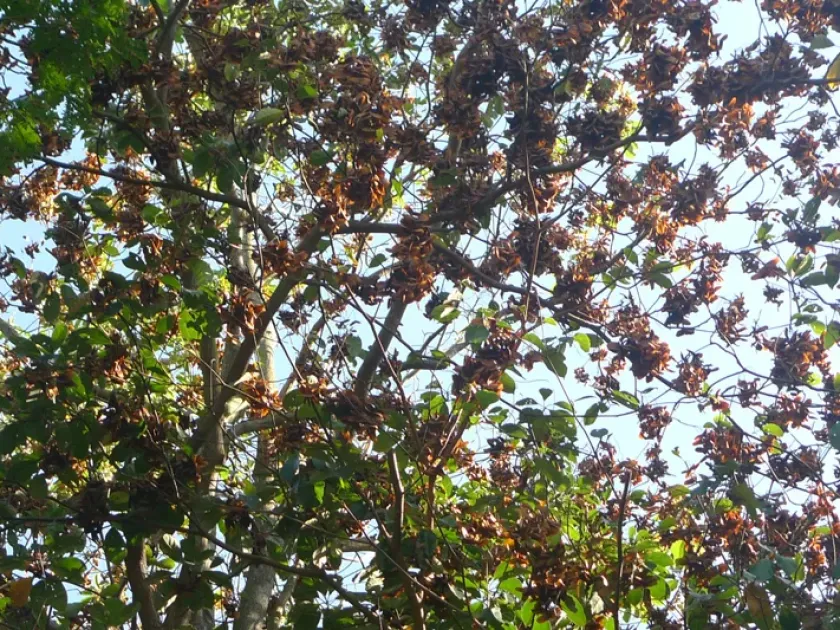
Description
Sowing dates
Terminalia ivorensis is propagated from seeds that should be collected from mature, healthy trees. For best results, seeds are sown in nursery beds at the beginning of the rainy season to capitalize on moisture for initial germination.
Pre-treatment of seeds, such as soaking in water for 24 hours, is often recommended to improve the germination rate. Seedlings are kept in nurseries for about 4 to 6 months until they reach a height of 40–60 cm, making them robust enough for field planting.
Site preparation involves clearing vegetation and tilling the soil to ensure a hospitable environment for young roots. Planting density is crucial, typically following a grid pattern that allows for optimal light interception while discouraging lateral branching.
In large-scale plantations, careful spacing is maintained to facilitate future management and mechanical harvesting. Providing adequate space during the first few years significantly improves the straightness of the trunks.
Direct seeding in the field is possible but carries higher risks due to environmental factors and predation. Nursery-grown seedlings remain the gold standard for establishing uniform and productive forest stands.
Growing requirements
As a member of the Combretaceae family, this species thrives in humid tropical climates with consistent rainfall. It requires high temperatures, ideally between 25°C and 32°C, to achieve its maximum growth potential.
Soil requirements include well-draining, deep, and fertile substrates. While it can adapt to various soil types, it performs best in loamy soils and strongly dislikes waterlogged conditions, which lead to root rot.
The species is highly photophilous, meaning it demands full sunlight to maintain its rapid growth rate. In dense forest canopies, seedlings and saplings may struggle, so clear-felling or open plantation management is necessary.
Moisture management is essential in the early stages; the tree does not tolerate extreme, prolonged droughts during its establishment phase. Regular irrigation during dry spells can drastically improve survival rates.
Nutrient supplementation is beneficial in plantation forestry to support the tree’s rapid biomass accumulation. Nitrogen-rich fertilizers are often applied during the first three years to stimulate shoot development.
Yield
Terminalia ivorensis is highly prized in commercial forestry for its fast growth rates. In ideal plantation settings, trees can reach heights of over 15 meters within a decade, making it a very efficient species for timber production.
The standard rotation cycle for harvest is typically 25 to 35 years. By this age, the trunk has attained a sufficient diameter to yield high-quality, durable timber that is resistant to fungi and termite attacks.
Known commercially as 'idigbo' or 'emeri', the timber is valued for its yellowish-brown color, fine texture, and excellent workability. It is a preferred material for high-end furniture, cabinet making, and joinery.
Strategic thinning of the plantation at years 10 and 20 can further improve the final timber quality. Removing suppressed or damaged trees allows the remaining specimens to allocate resources toward diameter growth.
The economic yield is high compared to other tropical hardwood species. Because of its predictable growth patterns, it is a stable investment for sustainable forestry operations in tropical regions.
Main diseases and pests
Leaf-eating insects are the most common biological threat. Defoliation by caterpillars can significantly reduce photosynthetic capacity, especially in young saplings, leading to stunted growth.
Fungal pathogens causing leaf spots and stem cankers are prevalent in areas with high humidity and poor air circulation. Management practices such as proper spacing and cleaning of debris help mitigate these risks.
Borer insects present a persistent challenge, as they can tunnel through trunks, damaging the wood quality and structural integrity of mature trees. Regular monitoring is essential to catch infestations early.
Weed competition is a major hurdle during the first two years. Fast-growing vines can easily smother young Terminalia ivorensis trees, necessitating frequent manual weeding until the trees are tall enough to shade out competitors.
Climatic hazards like severe windstorms can cause stem breakage, particularly in young, fast-growing trees with heavy crowns. Maintaining windbreaks around the plantation perimeter provides vital protection.
Harvesting
Harvesting is executed using standard industrial logging techniques, prioritizing the extraction of high-quality sawlogs. Selecting the correct season—typically the dry season—is crucial for efficient transport and logistics.
Technicians perform a pre-harvest assessment to identify trees that meet specific diameter and health criteria. Selective harvesting allows for a staggered yield, extending the life of the plantation.
On-site bucking involves cutting the felled trees into logs of appropriate lengths for sawmills. This process reduces transportation costs by leaving waste materials, like branches, in the field to decompose.
Modern logging equipment minimizes damage to the forest floor and surrounding younger trees. Safety protocols are strictly enforced due to the scale and height of the mature timber.
Post-harvest, the land is prepared for the next cycle. This may involve replanting with new seedlings or utilizing coppicing if the root systems remain healthy and robust enough to support new stems.