
Terminalia catappa
Terminalia catappa L.
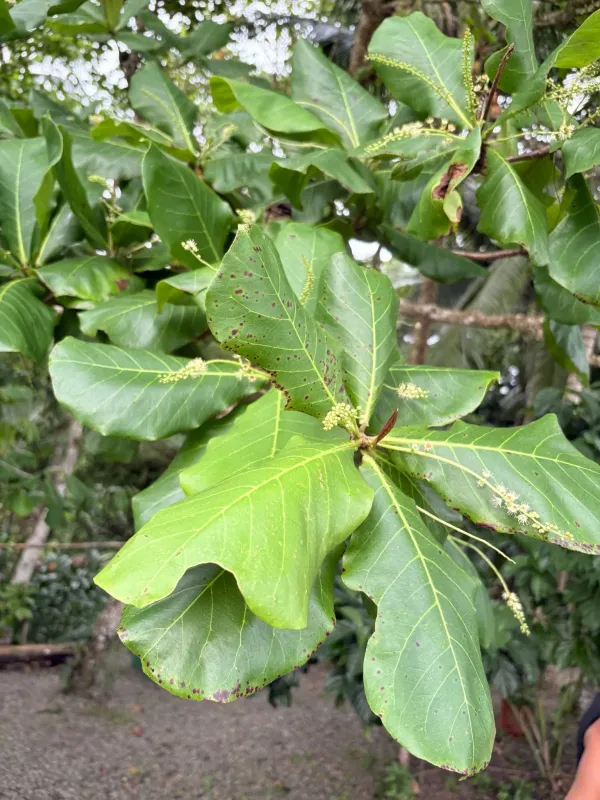
Description
Growing requirements
Terminalia catappa L., commonly known as the Indian almond or tropical almond, is a large tropical tree belonging to the Combretaceae family. It is recognized for its distinctive, umbrella-like canopy formed by tiered, horizontal branches.
Native to tropical Asia and parts of the Pacific, this tree has naturalized across tropical regions worldwide. It is uniquely adapted to coastal environments, demonstrating high salt tolerance and the ability to thrive in sandy soils where few other species can survive.
The tree requires a warm climate without frost, as it is highly sensitive to cold temperatures. Consistent tropical temperatures combined with sufficient sunlight are essential for the tree to reach its maximum height and fruit-bearing potential.
Soil requirements are relatively flexible, though the species prefers well-drained, fertile, or slightly alkaline substrates. While it does not tolerate waterlogging, it is highly resilient once established, making it an excellent choice for reforestation and shore stabilization.
Agronomic management involves standard care during the establishment phase, including supplemental watering. Once the deep taproot system develops, the tree becomes highly drought-tolerant, requiring minimal input to maintain its health and structural integrity.
Yield
Terminalia catappa is a multi-purpose tree of significant economic value. Its most notable product is the drupe, which contains an edible seed kernel with a flavour similar to that of a common almond, widely consumed in many tropical cultures.
The seed contains an oil rich in fatty acids, which is extracted for various commercial applications. This oil is utilized in culinary practices as a cooking fat and in the cosmetics industry for its moisturizing and soothing properties.
The timber of the tree is highly regarded for its durability and resistance to water. It is traditionally used in the construction of boats, high-quality furniture, and flooring, noted for its fine texture and attractive reddish-brown color.
In recent years, the leaves have gained global demand in the aquarium industry. When added to water, they release tannins that lower the pH and possess anti-fungal and anti-bacterial properties, which are beneficial for the health of freshwater fish.
The bark and leaves are also rich in tannins, traditionally used in the leather tanning industry. Furthermore, various parts of the plant are utilized in traditional medicine systems to treat digestive and skin-related ailments.
Main diseases and pests
Terminalia catappa is generally robust, but it can be susceptible to fungal diseases, particularly in humid or stagnant air conditions. Leaf spot diseases are the most frequent, often appearing when foliage remains wet for extended periods.
Insect pests such as leaf miners, aphids, and scale insects can affect younger trees. These pests usually target the soft tissue of new leaves, potentially stunting growth if left unmanaged during the early years of the tree's development.
Integrated pest management is recommended for plantations to minimize chemical usage. Proper spacing during planting is crucial to ensure optimal airflow through the canopy, which naturally suppresses most fungal pathogens and reduces humidity around the leaves.
Routine maintenance includes removing dead or diseased branches to prevent the spread of infections. Cleanliness in the orchard area is also important to prevent the build-up of decaying matter that might host soil-borne diseases.
Monitoring the plant's nutrient status is vital, as micronutrient deficiencies can make the foliage more susceptible to environmental stress and subsequent pest attacks. Balanced fertilization in nursery settings helps ensure the long-term health of the crop.