
Cape honeysuckle
Tecoma capensis (Thunb.) Lindl.
Description
Growing requirements
Cape honeysuckle (Tecoma capensis) is a vigorous evergreen shrub belonging to the Bignoniaceae family. Originally native to Southern Africa, it is widely cultivated in tropical and subtropical regions for its rapid growth and brilliant tubular flowers.
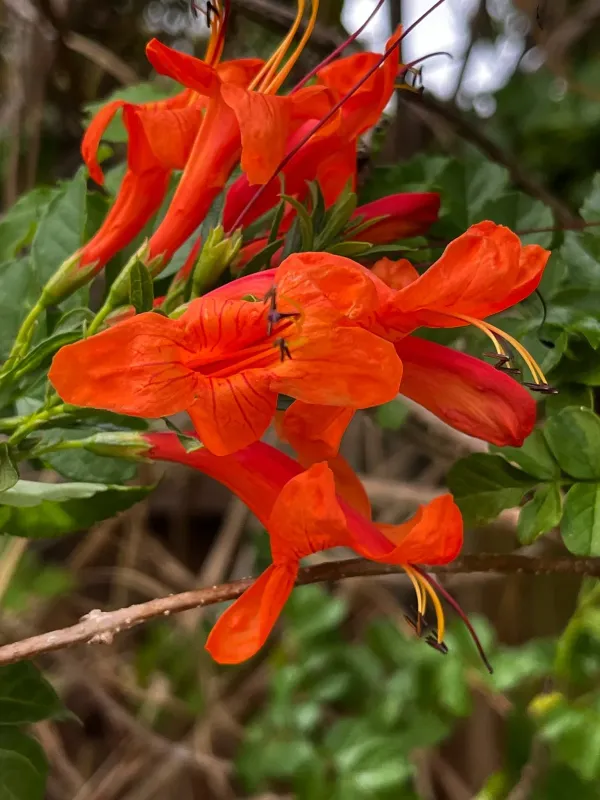
The plant features pinnate, dark green leaves and clusters of trumpet-shaped flowers that range from deep orange to scarlet. It can grow as a sprawling shrub or be trained as a climber, making it a versatile choice for landscaping and hedges.
Success in cultivation requires a sunny position, as this plant needs direct light to produce the best flower display. It thrives in well-draining, fertile soils and is moderately tolerant of varied soil conditions, provided they are not overly compacted or waterlogged.
Moisture requirements are moderate once the plant is established. However, during the growing season, consistent watering is essential to maintain lush foliage and promote continuous blooming. It is highly sensitive to frost and must be protected in colder climates.
Maintenance involves regular pruning, which is necessary to manage the plant's aggressive growth habit. Pruning after the main flowering season encourages a denser structure and healthier wood for the following year's growth.
Main diseases and pests
Cape honeysuckle is susceptible to common garden pests such as aphids, spider mites, and scale insects. These pests are particularly problematic in dry, stagnant air conditions where they can quickly colonize the succulent tips of the branches.
Fungal diseases, including powdery mildew and root rot, can occur if the plant is grown in overly damp conditions with poor air circulation. Ensuring adequate space between plants is a key cultural practice for preventing these issues.
Root rot is often a result of overwatering or poor soil drainage, which deprives the roots of oxygen. If the plant shows signs of chlorosis or wilting despite adequate watering, checking the root zone for signs of decay is the first step.
Integrated pest management strategies are recommended, utilizing horticultural soaps or systemic insecticides when infestation levels exceed acceptable thresholds. Periodic cleaning of the leaves can also help remove dust and discourage spider mite populations.
Strong, healthy plants maintained with proper nutrition and appropriate site selection are significantly more resilient. Regular observation is the best tool for identifying early signs of stress or pest colonization before they become severe.