
Tibetan catalpa
Catalpa tibetica
Description
Growing requirements
Tibetan catalpa (Catalpa tibetica) is a distinct species belonging to the Bignoniaceae family. Native to the high-altitude regions of Tibet and parts of China, it exhibits unique physiological traits that allow it to thrive in specific environmental niches.
Successful cultivation requires a location with full exposure to sunlight and protection from strong, desiccating winds. The ideal soil profile consists of deep, fertile, and well-draining loams, as the root system is sensitive to waterlogging, which can cause severe decay.
Climatic requirements are centered on a temperate growing season with adequate moisture levels during the spring flush. While the species is moderately hardy, gardeners should implement mulch blankets during the winter to protect the root zone of young trees from freezing temperatures.
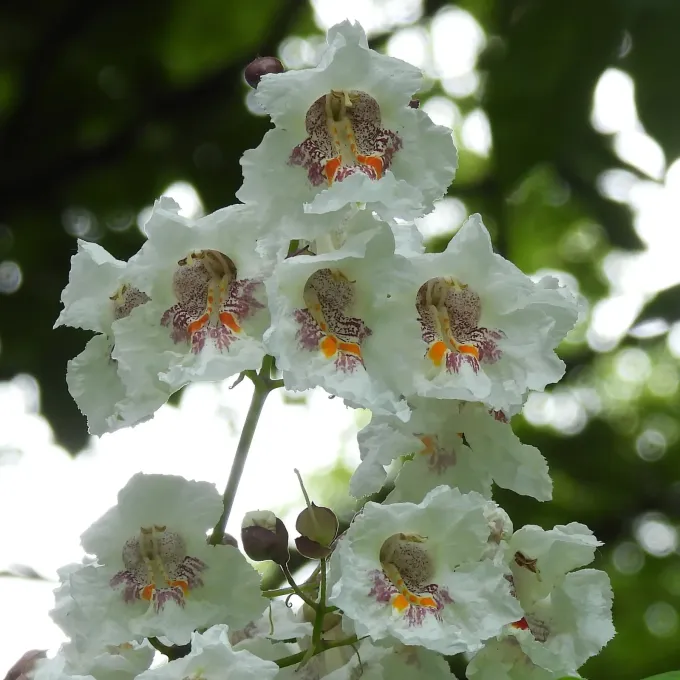
The botanical structure is characterized by large, cordate leaves that form a dense, lush canopy. In mid-summer, the tree produces showy, fragrant panicles of bell-shaped flowers, which provide significant aesthetic value and biological support for local pollinators.
Host-plant utility is primarily ornamental. It is highly valued in landscape architecture for creating focal points in large estates, public gardens, or as a shade-providing specimen tree that adds an exotic touch to temperate-zone planting schemes.
Main diseases and pests
The primary threats include fungal leaf spot diseases and verticillium wilt, often exacerbated by poor air circulation or over-irrigation. Proper pruning to open the center of the tree canopy is essential for maintaining plant vigor and health.
Insects such as mealybugs and various leaf-eating caterpillars may infest the foliage during the growing season. Integrated pest management practices, including the use of horticultural oils or systemic treatments, are recommended to maintain the tree's health and appearance.