
Catalpa hybrids
Catalpa hybrids
Description
Growing requirements
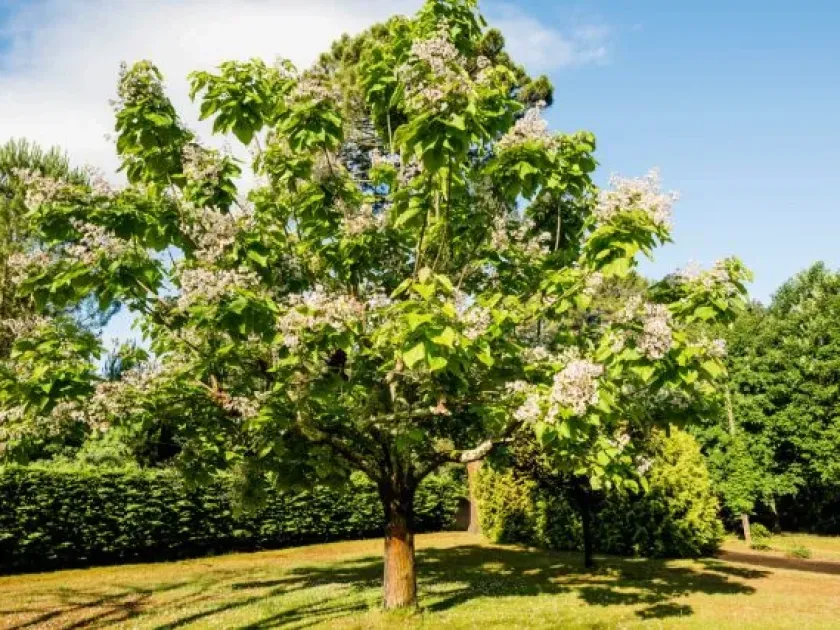
Catalpa hybrids (Catalpa × erubescens) are distinctive deciduous trees belonging to the Bignoniaceae family. These hybrids are highly valued in horticulture for their broad, heart-shaped leaves and spectacular white or pinkish panicles that bloom in early summer.
The trees thrive in full sun locations but require protection from strong winds. Because of the large size of their foliage, wind exposure can lead to mechanical tearing and significant damage to the overall aesthetic of the tree canopy.
For optimal growth, Catalpa hybrids require deep, fertile, and well-drained soils. They are relatively adaptable to soil pH levels but perform best in nutrient-rich loams. Adequate drainage is critical, as waterlogged conditions can lead to root system failure.
Cultivation practices include regular watering during the first few years after planting to establish a healthy root system. Once mature, these trees show moderate drought tolerance, although supplementary watering during heatwaves will maintain leaf vigor.
These trees are extensively used in urban planning due to their high tolerance to air pollution. Their massive, dense crown provides an excellent natural shade, making them ideal for parks, open public spaces, and large private residential landscapes.
Main diseases and pests
Common pests affecting Catalpa species include aphids and scale insects. These pests often congregate on the underside of the leaves or young stems, causing leaf curl and yellowing. Systemic insecticides are recommended for effective control.
Powdery mildew represents a frequent fungal issue, characterized by a white, powdery coating on the leaves. Providing adequate spacing and ensuring good airflow through the branches significantly reduces the risk of fungal establishment in the canopy.
Verticillium wilt is a serious soil-borne disease that can impede water transport within the tree. It manifests as sudden wilting of leaves and branches. Pruning infected branches is essential, and tools must be sterilized to prevent further contamination.
Leaf spot diseases can occur during humid and wet summers. To minimize these threats, it is important to collect and dispose of all fallen foliage in the autumn, as fungal spores often overwinter in the leaf litter beneath the tree.
Mechanical damage to the trunk can serve as an entry point for wood-boring insects and fungal decay. Keeping the base of the tree clear of grass and avoiding mower damage to the bark are essential components of long-term plant health management.