
Heart-leaf hornbeam
Carpinus cordata
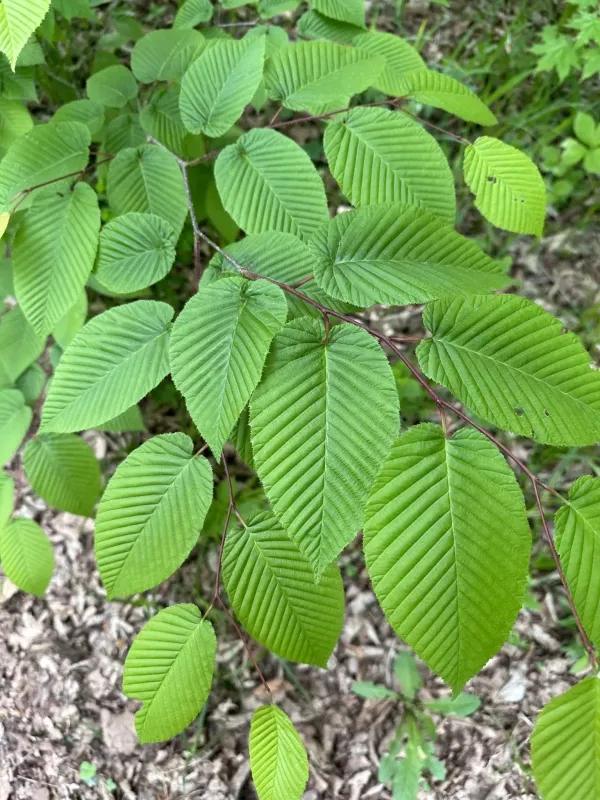
Description
Sowing dates
The heart-leaf hornbeam is a deciduous tree species belonging to the Birch family (Betulaceae), primarily native to East Asia.
Propagation is mainly achieved through seeds. The seeds should be collected in autumn and require stratification for several months to break dormancy.
Sowing in nurseries is typically done in late autumn or early spring. Seeds are planted at a depth of about 2–3 centimeters in well-drained, moist soil.
Vegetative propagation via cuttings is possible but technically challenging, requiring growth hormones and controlled greenhouse conditions for successful rooting.
Young seedlings require protection from direct sunlight and excessive dryness during their first two years to establish a healthy root system.
Growing requirements
This species thrives in nutrient-rich, moist, and well-drained loamy soils. It is sensitive to waterlogging and prefers sites with good aeration.
The heart-leaf hornbeam is known for its shade tolerance, allowing it to grow effectively under the canopy of larger forest trees.
It has moderate to high requirements for air humidity and does not tolerate prolonged droughts well, especially in the early stages of development.
The tree is generally hardy in temperate climates, though young growth may be susceptible to damage from late spring frosts.
Given its structure, it adapts well to urban environments, making it a viable candidate for landscape design in parks and suburban areas.
Main diseases and pests
The primary diseases affecting the heart-leaf hornbeam include powdery mildew and various leaf spot fungi, often triggered by humid conditions.
Insect pests such as leaf-eating caterpillars and certain beetles can cause defoliation, which may hinder the tree's overall vigor.
Wood-boring insects can pose a threat to the trunk, especially in trees stressed by poor environmental conditions or physical damage.
Integrated pest management strategies, including the removal of infected branches and ensuring optimal spacing, are key to maintaining tree health.
Chemical control with systemic insecticides is used only in severe cases to minimize ecological impact and preserve the tree's aesthetic value.
Harvesting
The timber of the heart-leaf hornbeam is highly valued for its hardness, density, and durability, often used in precision woodworking and tool handles.
Harvesting is typically conducted during the winter dormancy period to ensure the structural integrity and quality of the wood fibers.
The tree plays a significant role in forest conservation and soil stabilization, particularly on slopes prone to erosion.
In landscaping, it is favored for its distinctive heart-shaped foliage, which offers ornamental value throughout the growing season.
Beyond its industrial utility, the species serves as a vital component of local biodiversity, supporting various insects and woodland birds.