
Erman's birch
Betula aurata
Description
Growing requirements
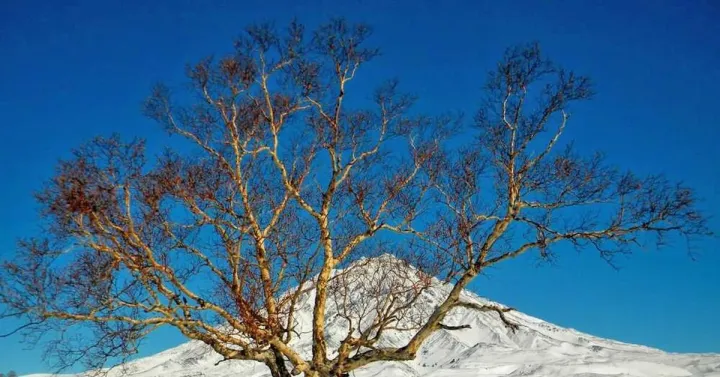
Erman's birch, known as the golden birch, belongs to the Betulaceae family. It is widely recognized for its beautiful exfoliating bark, which displays rich golden or creamy-white hues, making it a highly prized specimen for landscaping.
The species originates from the Far East, including Japan, Korea, and Eastern Russia. It typically inhabits mountainous regions and rocky slopes, which has shaped its remarkable resilience and ability to thrive in poor soil conditions.
The tree requires well-drained soil and does not tolerate waterlogging. It is a sun-loving plant that performs best in open locations where it can receive direct sunlight throughout the day to support its healthy crown development.
This birch is exceptionally cold-hardy and capable of withstanding harsh, continental winters. Its root system is strong and deep, allowing the tree to anchor firmly in rocky substrates or uneven terrain typical of its natural habitat.
Agricultural management for this species is relatively straightforward. Minimal pruning is required, primarily focusing on removing dead or crossing branches to maintain the tree's natural and elegant shape.
Yield
Erman's birch is primarily valued for its ornamental quality in public parks and private gardens. Its timber, known for extreme density and hardness, is historically significant in East Asian forestry, where it is often referred to as stone birch.
In landscaping, the tree serves as a focal point due to its distinctive bark and attractive foliage. It is frequently used in large-scale park designs to provide structural interest and visual harmony across different seasons.
The species plays an important role in soil stabilization on slopes. Its roots contribute to erosion control, making it an excellent choice for environmental restoration projects on challenging terrains.
Nursery cultivation focuses on producing vigorous specimens with the most intense bark coloration. These trees are highly sought after by landscape architects for high-end residential and commercial outdoor spaces.
While the tree grows at a moderate pace, the long-term aesthetic benefits of its mature form provide significant value to any landscape project, ensuring year-round beauty.
Main diseases and pests
Erman's birch is naturally resistant to many pests and diseases that affect other birch species. However, poor air circulation in dense plantations can occasionally lead to fungal issues, such as leaf spot, which should be managed with proper thinning.
Occasional infestations by leaf-eating insects may occur during the spring growth flush. Integrated pest management, including monitoring and biological controls, is effective in keeping the foliage healthy and pristine.
- Ensure adequate spacing between trees to promote airflow.
- Implement proper mulching to maintain root health and soil moisture.
- Perform periodic inspections for signs of wood-boring pests.
The species can be sensitive to urban pollution, so it is best planted in areas with cleaner air, such as arboretums, large suburban gardens, or naturalized forest settings.
Overall, providing a site that mimics its natural high-altitude environment is the best way to prevent stress and keep the tree vigorous against potential environmental threats.