
Formosan alder
Alnus formosana
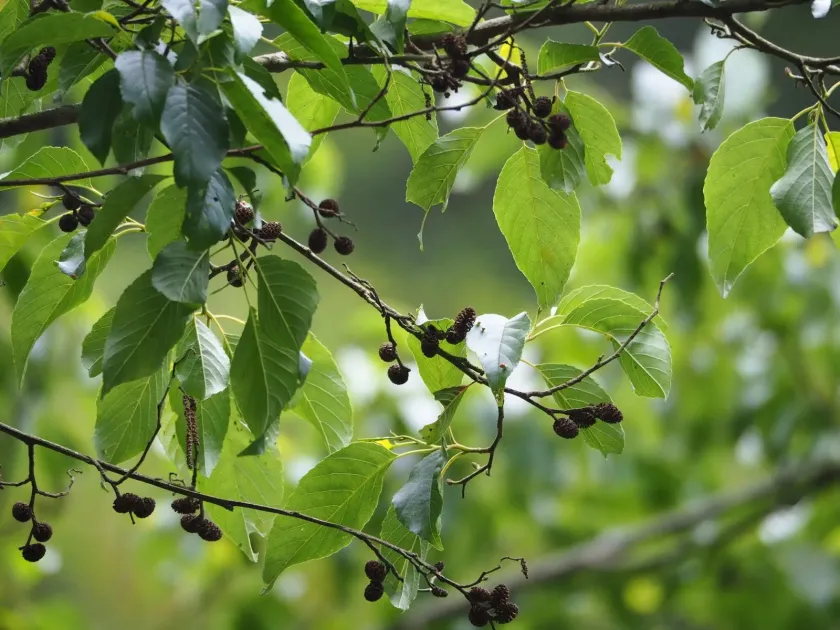
Description
Sowing dates
Sowing of Formosan alder (Alnus formosana) seeds typically begins in early spring once soil temperatures have stabilized. To ensure high germination rates, seeds should undergo a cold stratification process to overcome dormancy before they are sown in nursery beds.
Seeds are broadcast or drilled into well-drained, fertile growing media at a shallow depth of approximately 0.5–1 cm. Maintaining consistent soil moisture during the germination phase is critical for the establishment of vigorous seedlings.
In commercial forestry, both direct seeding and the planting of nursery-raised seedlings are utilized. Planting 1–2 year old saplings is generally preferred for establishing plantations, as it results in better survival rates and more uniform stand development.
Site preparation is a mandatory step that involves deep plowing to break up compacted soil and thorough removal of competing weeds. Removing vegetation ensures that young alder trees have unobstructed access to water, nutrients, and sunlight during their critical early growth stages.
Spacing density varies according to the intended end-use of the timber. A wider spacing is usually employed to promote clear-stemmed tree growth, while closer spacing may be used for environmental services like bank stabilization or windbreak creation.
Growing requirements
Formosan alder belongs to the Betulaceae family and is native to Taiwan. This fast-growing deciduous tree is well-adapted to subtropical and temperate climates, thriving in areas that receive high annual rainfall and maintain high humidity levels.
The species prefers moist to wet soils and is commonly found along riverbanks, streams, and in damp, low-lying areas. While it tolerates various soil types, it performs best in loose, nutrient-rich loams that offer good drainage despite the moisture requirements.
As a light-demanding species, Formosan alder requires full sun exposure for optimal development. Shading by surrounding canopy or vegetation significantly hinders its growth rate, which can lead to elongated, weak trunks and reduced biomass production.
The tree thrives in moderate temperatures and is sensitive to extreme frost. Successful cultivation is generally confined to regions with temperate-to-subtropical weather patterns where harsh winters are avoided, ensuring long growing seasons.
A distinctive biological feature is the plant's ability to form symbiotic relationships with nitrogen-fixing actinomycetes of the genus Frankia. This biological nitrogen fixation makes the tree highly effective for soil rehabilitation and improving fertility in nutrient-poor environments.
Yield
The primary economic value of Formosan alder lies in its timber, which is appreciated for being lightweight, soft, and easy to machine. It is extensively used in manufacturing furniture, plywood, veneers, and a variety of small-scale wooden crafts.
Due to its rapid early growth, the species is highly valued in plantation forestry. It provides a relatively quick harvest cycle compared to many hardwood species, offering sustainable yields for the timber industry within a 15–20 year time frame.
Beyond timber production, Formosan alder serves significant roles in agroforestry. Its ability to create effective windbreaks and shelterbelts protects nearby sensitive crops from mechanical damage and reduces moisture loss caused by wind.
Its deep, spreading root system is highly effective in preventing soil erosion. This makes it an ideal choice for planting along stream banks and on unstable slopes, helping to protect riparian zones and mitigate sedimentation in aquatic habitats.
The leaf litter from this alder breaks down rapidly, enriching the forest floor with organic matter and available nitrogen. This process enhances the overall productivity of the agro-ecosystem, supporting the growth of other plants within the vicinity.
Main diseases and pests
Formosan alder stands may face risks from various fungal pathogens, particularly root and stem rots that thrive in poorly drained soils. Excess moisture around the root zone can weaken trees, making them more susceptible to infectious diseases.
Defoliating insects and pests, such as leaf beetles or sawflies, can cause significant damage to the canopy if not monitored. While mature trees are resilient, repeated infestations on younger trees can severely stunt their annual increment.
Mechanical injuries to the bark are potential entry points for pathogens. Proper management during silvicultural operations is necessary to avoid scarring trunks, as damaged areas are highly vulnerable to rot-inducing fungi and wood-boring insects.
Competition from invasive plant species or fast-growing weeds represents a major threat during the establishment phase. Without active maintenance, the alder saplings can easily be overwhelmed, leading to increased mortality and poor stand development.
Preventative management, including maintaining adequate stand density for air circulation and prompt removal of diseased individuals, is the best strategy for maintaining a healthy and productive Formosan alder plantation.