
Japanese alder
Alnus japonica
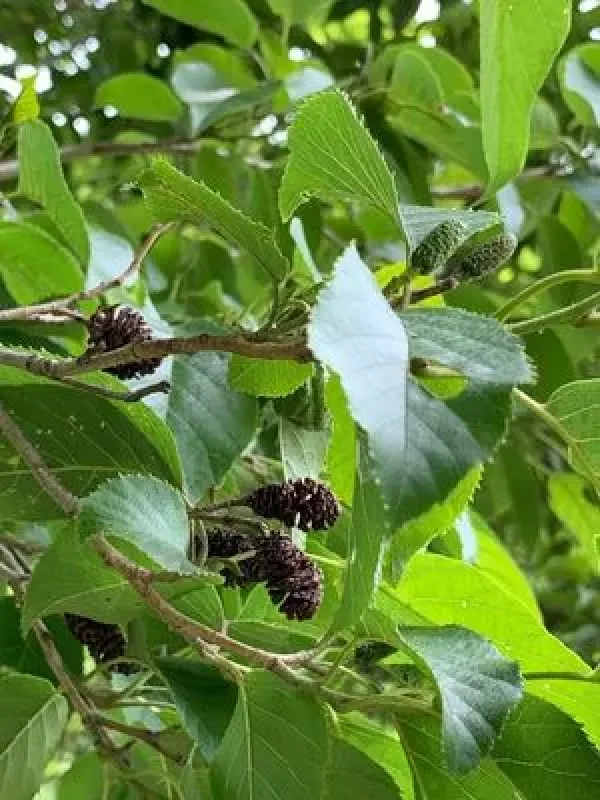
Description
Sowing dates
Japanese alder is primarily propagated through seeds, which are typically sown in nurseries during early spring after a period of stratification to improve germination rates.
The nursery beds should be composed of well-drained but moisture-retentive soil. Keeping the seedbed consistently moist is crucial for successful emergence of the seedlings.
Young plants are usually grown in nursery conditions for two to three years until they reach a sufficient height and root mass to be transplanted to the forest site.
During the early development stage, intensive weeding is required to ensure that the small seedlings are not outcompeted by aggressive grasses and weeds.
While vegetative propagation through cuttings is theoretically possible, it is rarely used in forestry practice due to the high efficacy and low cost of seed-based propagation.
Growing requirements
As a member of the Betulaceae family, the Japanese alder is highly moisture-demanding. It naturally thrives in riparian zones, wetlands, and areas with high water tables.
The tree prefers deep, fertile, loamy soils. Its roots maintain a symbiotic relationship with nitrogen-fixing bacteria, allowing it to improve soil fertility in nutrient-poor environments.
The species is well-adapted to temperate climates and demonstrates excellent cold hardiness, making it suitable for reforestation projects in cooler regions.
Full sun is preferred for optimal growth. While the tree can tolerate partial shade, insufficient sunlight often leads to stunted growth and reduced timber quality.
Adequate water supply is the most critical requirement; planting this species in dry or drought-prone areas will inevitably lead to poor survival rates and high mortality.
Yield
Japanese alder is valued for its rapid growth rate, making it a viable option for short-rotation forestry. It can attain significant timber volume within 30 to 40 years.
The wood is lightweight, uniform in texture, and remarkably durable when submerged in water, which makes it highly sought after for underwater pilings and construction.
Beyond timber, the tree provides significant environmental benefits, including erosion control along riverbanks and the improvement of soil structure through nitrogen fixation.
When managed as a plantation, consistent thinning and spacing protocols allow for the production of high-quality sawlogs suitable for furniture and plywood industries.
Yield metrics are influenced by site quality and moisture levels; therefore, selecting appropriate wetland sites is essential for maximizing forest productivity.
Main diseases and pests
Root rot caused by various fungal pathogens is a significant threat, especially in sites where water stagnation occurs, leading to physiological stress in the tree.
Pests, such as the alder leaf beetle, can cause severe defoliation during peak summer months, potentially leading to significant reductions in annual growth increments.
Stem-boring insects and bark beetles often attack weakened or stressed individuals, necessitating strict sanitation measures in plantation management.
Wildlife damage, particularly from deer or rodents grazing on young bark, can introduce pathogens that compromise the health of the tree and its eventual market value.
Effective management strategies include the prompt removal of infected timber and the use of protective netting for young saplings until they reach a certain height.
Harvesting
Timber harvesting typically takes place in the dormant season, which facilitates easier logging operations and preserves the quality of the harvested logs.
Modern forestry practices emphasize the use of low-impact logging equipment to prevent soil compaction and damage to the sensitive wetland ecosystems where alder grows.
Post-harvest cleanup is mandatory to minimize the buildup of debris, which serves as a breeding ground for insects and fungal spores that could impact the remaining forest.
The harvested wood must be processed quickly after felling to maintain its structural integrity and prevent natural decay in humid storage conditions.
Sustainability protocols ensure that harvesting schedules are balanced with replanting programs to maintain the long-term ecological balance of the plantation.