
Serruria rosea
Serruria rosea
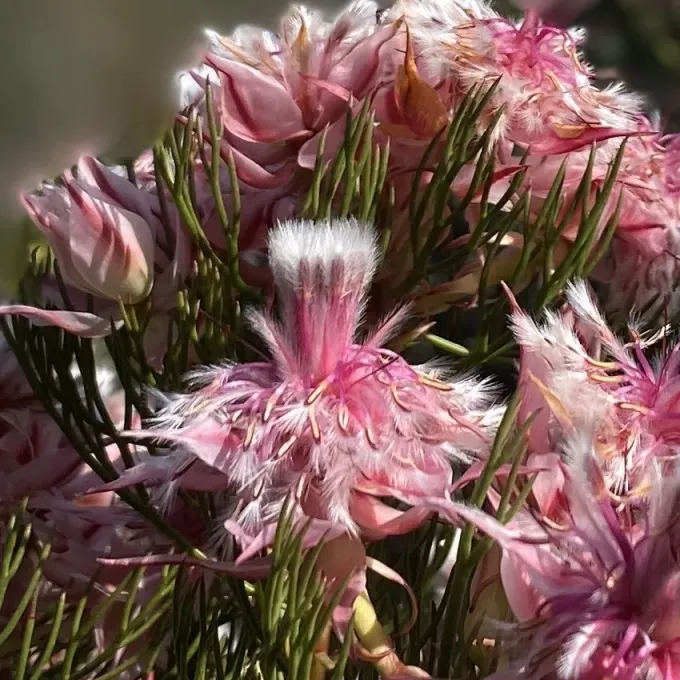
Description
Sowing dates
Serruria rosea belongs to the Proteaceae family and is an evergreen shrub native to the fynbos regions of South Africa. Propagation is typically achieved through seeds or semi-hardwood cuttings.
Seeds should be sown in late summer or early autumn, mimicking the natural germination cycle of the species in its wild habitat following seasonal fire events.
Pre-treatment of seeds with smoke-water or specific primers is often required to break seed dormancy, a common biological trait in many Proteaceae species.
The sowing medium must be highly porous, acidic, and extremely low in fertility to prevent the rapid growth of opportunistic pathogens that destroy young seedlings.
Successful germination requires consistent ventilation and moderate temperatures, as the seedlings are highly susceptible to "damping off" in humid and stagnant air conditions.
Growing requirements
Serruria rosea requires a Mediterranean-like climate and is highly sensitive to frost, making it suitable for protected cultivation in greenhouses in non-temperate zones.
The plant thrives under full sun exposure, which is critical for developing strong stems and vibrant flower colors during the vegetative and reproductive stages.
Soil requirements are strict: the substrate must have excellent drainage, low phosphorus content, and an acidic pH ranging from 5.0 to 6.0 to support healthy root development.
Phosphorus toxicity is a significant risk; therefore, organic matter or fertilizers containing phosphorus should be strictly avoided to prevent chlorosis and plant decline.
Irrigation water must be low in minerals and salinity; using poor-quality water can lead to the rapid accumulation of salts, which severely damages the plant's root system.
Yield
The primary agricultural use of Serruria rosea is as a high-value ornamental cut flower, highly sought after in international floral markets for its unique, delicate appearance.
Effective yield management relies on post-flowering pruning to encourage dense branching and maximize the production of harvestable flower stalks for the following season.
Greenhouse-grown plants allow for better control of production cycles, ensuring higher consistency in stem length and flower quality compared to open-field cultivation.
Proper harvesting techniques, including cutting the stems at the correct stage of bloom, are essential for ensuring a long vase life for the final consumer.
Profitability is driven by the exclusivity of the product, making it a specialty crop for growers focused on high-end floral design and luxury market segments.
Main diseases and pests
Root rot pathogens, particularly Phytophthora species, are the most significant threat to Serruria rosea, often caused by waterlogging or poor drainage in the potting medium.
Pests like aphids and mealybugs can infest the terminal growth, requiring careful monitoring and integrated pest management strategies to maintain plant vigor.
Nutrient imbalances, particularly those caused by over-fertilization, are major threats that cause physiological stress, leaf yellowing, and eventual plant death.
- Strict hygiene measures to prevent the spread of soil-borne pathogens.
- Maintaining optimal airflow in greenhouses to prevent fungal leaf spots.
- Regular soil testing to monitor nutrient and pH levels.
Proactive management is vital because the specialized root structure of Proteaceae makes them intolerant to many traditional chemical treatments used in large-scale agriculture.