
Hakea victoria
Hakea victoria
Description
Growing requirements
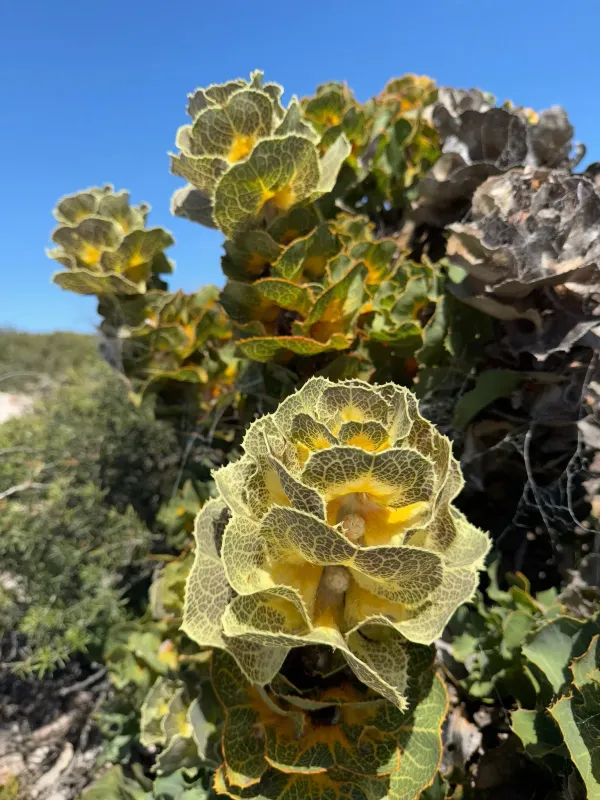
Hakea victoria, commonly known as the Royal Hakea, is a distinct species within the Proteaceae family, native to the southwestern region of Western Australia. This slow-growing evergreen shrub is highly prized for its rigid, holly-like leaves that exhibit a spectacular color transition from green to yellow and red as they age.
In terms of climate, Hakea victoria requires a Mediterranean-like environment characterized by dry summers and mild, moist winters. It is highly intolerant of high humidity combined with heat, which often creates an environment conducive to plant decay and root pathogens.
The soil requirements are strict: the plant necessitates extremely well-draining, sandy, or gravelly soils. It is particularly sensitive to phosphorus; therefore, standard fertilizers must be avoided to prevent phosphorus toxicity, which is common in many Proteaceae species.
Cultivation should prioritize full sun exposure to maintain the vibrant leaf coloration. Good airflow is essential, especially when grown in containers or greenhouses, to prevent moisture accumulation on the foliage and within the plant structure.
Management practices involve minimal pruning, only performed to shape the plant or remove dead branches. Care must be taken to ensure that the root zone is kept cool and free from waterlogging, which is the leading cause of plant failure in non-native environments.
Main diseases and pests
The primary threat to Hakea victoria is root rot caused by Phytophthora cinnamomi. This soil-borne pathogen thrives in wet, heavy soils and can kill the plant quickly, making strict drainage control a vital management strategy.
Pests such as scale insects and mealybugs can occasionally infest the plant, settling in the crevices of its dense foliage. Integrated pest management using insecticidal soaps is generally preferred over harsh chemical sprays.
Leaf spotting diseases may occur if the foliage remains wet for extended periods. Proper spacing between plants is recommended to facilitate air movement and reduce the humidity around the leaves.
Excessive nitrogen fertilization can lead to soft, succulent growth that is more attractive to sap-sucking insects, so nutritional input should be kept to a minimum and targeted toward slow-release, native-friendly fertilizers.
Environmental stress, such as sudden shifts from dry to wet conditions, can weaken the plant's natural defenses, making it more susceptible to secondary infections from opportunistic fungi.