
Warty-fruited hakea
Hakea verrucosa
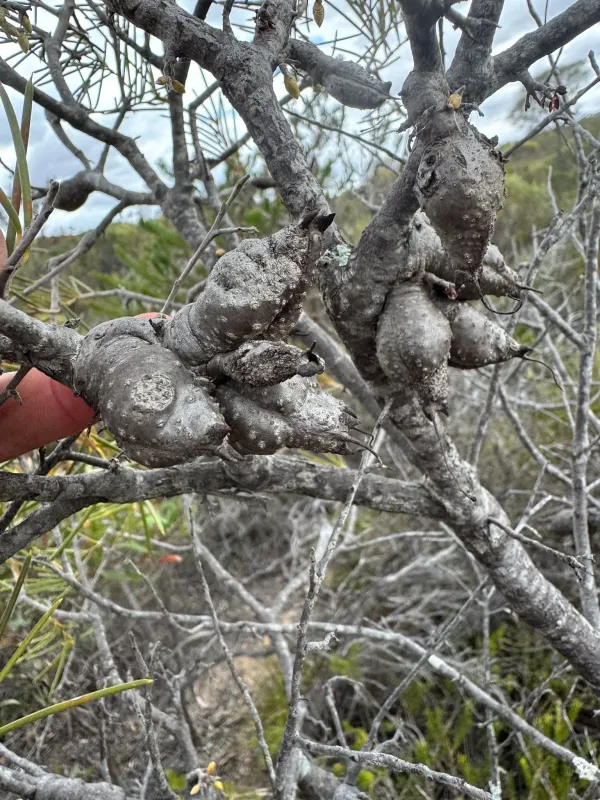
Description
Growing requirements
Hakea verrucosa, commonly known as the warty-fruited hakea, is a perennial shrub belonging to the Proteaceae family. This species is native to Western Australia, where it is found in diverse rocky and sandy habitats.
The plant requires extremely well-draining, nutrient-poor soil. It is highly adapted to low-phosphorus environments, making standard garden fertilizers potentially toxic to its sensitive root system.
Hakea verrucosa thrives in full sun exposure. It needs bright, direct light to maintain its structural integrity and to promote healthy flowering throughout its active growing season.
Regarding climatic needs, this shrub prefers a Mediterranean climate. It is not cold-hardy and requires protection from frost and freezing temperatures to survive long-term.
Watering management is crucial; the plant should be allowed to dry out significantly between irrigation sessions to prevent the development of root rot and other moisture-related pathogens.
Main diseases and pests
The primary threats to Hakea verrucosa are root-rot fungi, particularly Phytophthora species, which thrive in poorly drained or waterlogged soils.
Pests such as scale insects or mealybugs may occur, especially in greenhouse environments, requiring careful manual removal or targeted pest management.
Nutrient toxicity, especially from excessive phosphorus or nitrogen, can cause leaf chlorosis and root burn, which often proves fatal to the plant.
Mechanical damage to the roots through soil cultivation or digging can create entry points for soil-borne pathogens, severely stressing the shrub.
Poor airflow around the foliage can lead to secondary fungal infections, particularly if the plant is grown in a humid or stagnant environment.