
Silky hakea
Hakea sericea
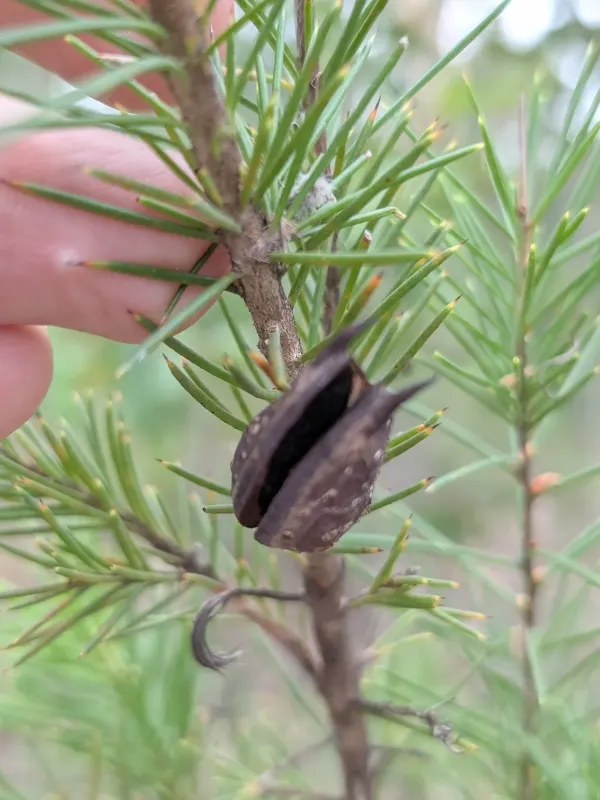
Description
Sowing dates
Propagation of Hakea sericea is primarily achieved through seeds. In nature, these plants rely on heat from wildfires to release seeds from woody follicles, so pre-sowing heat treatment is often simulated in cultivation.
Seeds should be sown in spring using a well-draining, nutrient-poor propagation mix. It is crucial to use pots that allow for easy root development without disturbing the taproot during transplanting.
The optimal germination temperature ranges between 18 and 24 degrees Celsius. Maintaining consistent but light moisture levels is essential for successful seedling emergence.
When sowing in trays, space seeds evenly to prevent overcrowding, which can encourage damping-off disease. Seedlings are typically kept in the nursery until they reach a robust size.
Professional growers often use scarification techniques to break the seed coat, significantly increasing the uniformity of germination across the entire seed batch.
Growing requirements
As a member of the Proteaceae family, Hakea sericea is highly adapted to nutrient-deficient soils, particularly those low in phosphorus. High-nutrient fertilizers can be toxic to the plant.
The species requires full sun exposure to thrive. Shade-grown specimens tend to become spindly, exhibit reduced flowering, and are more susceptible to physiological stress.
Soil structure is critical. The plant demands excellent drainage; it naturally grows in sandy or rocky substrates where water passes through quickly, preventing saturation.
The ideal soil pH is acidic to neutral. Growers should avoid soils with high clay content unless significant amendments are made to improve aeration and drainage capacity.
Regarding climate, Silky Hakea prefers Mediterranean-type climates with mild winters. While it can withstand occasional light frosts, prolonged freezing temperatures will damage foliage and stems.
Main diseases and pests
Root rot is the most significant agronomic threat. It is almost exclusively caused by poor soil drainage and over-irrigation, leading to oxygen deprivation in the root zone.
Fungal leaf spot infections may occur in areas with high humidity and poor airflow. Improving plant spacing and crown management are effective preventative measures.
Pest pressure from aphids or scale insects can be significant in young plants. These pests feed on phloem sap, weakening the plant and encouraging secondary infections.
Regular sanitation, including the removal of dead or dying branches, helps maintain plant vigor and prevents the accumulation of pathogen inoculants within the canopy.
In regions where the plant is introduced, it is often classified as an invasive weed due to its aggressive seeding habit, which requires strict environmental monitoring.