
Grass-leaf hakea
Hakea multilineata
Description
Growing requirements
The Grass-leaf hakea (Hakea multilineata) belongs to the Proteaceae family. This striking evergreen shrub originates from the arid regions of Western Australia, where it thrives in harsh environments.
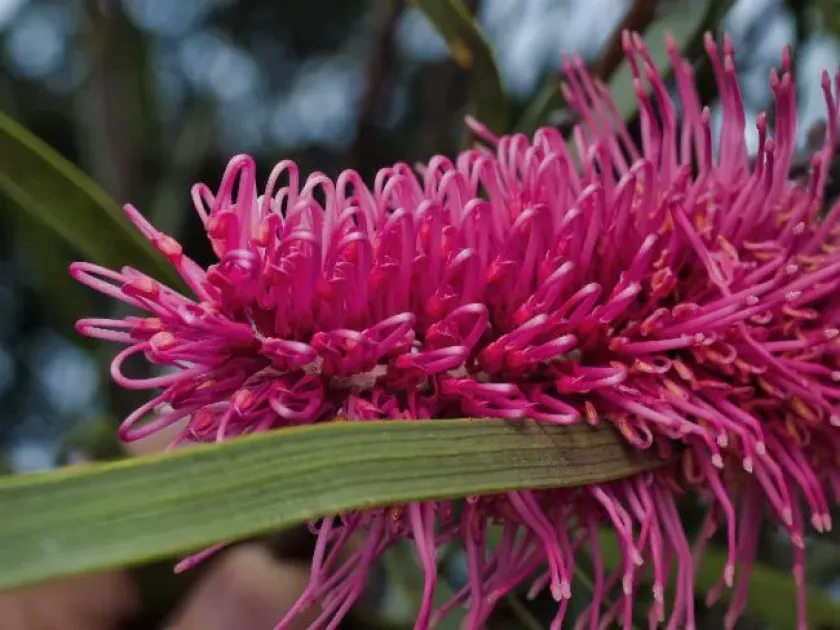
The plant is botanically noted for its long, narrow leaves with prominent parallel veining, which provide a distinctive texture. Its vibrant pink or red brush-like flowers are a hallmark of the genus, attracting various pollinators.
For successful cultivation, the plant requires exceptionally well-drained soils, ideally sandy or gravelly loam. It is highly sensitive to waterlogging, necessitating raised beds if the local soil is heavy or prone to moisture retention.
Hakea multilineata thrives in full sun and warm, dry climates. It exhibits significant drought tolerance, making it an excellent candidate for xeriscaping and low-maintenance landscape projects in suitable mediterranean climates.
Cultivation practices require careful attention to fertilization; the species is extremely phosphorus-sensitive, typical of many Proteaceae. One must use only fertilizers specifically formulated for native Australian plants to avoid root damage.
Main diseases and pests
The primary threat to the species is root rot, typically caused by Phytophthora fungi. This condition is almost exclusively linked to poor drainage or overwatering, which creates an environment conducive to fungal pathogens.
Pests such as mealybugs and spider mites may occasionally infest the plant, particularly if airflow is restricted or if the plant is grown in a glasshouse or conservatory with high humidity.
While the plant is hardy, it is susceptible to structural damage if exposed to extremely high winds or heavy, unseasonal rainfall, which can break fragile stems or cause sudden wilting.
Disease management relies heavily on preventative measures. Ensuring adequate plant spacing and strict moisture control are the best ways to maintain a healthy root system and avoid the need for chemical intervention.
If fungal issues arise, it is essential to prune away the affected parts immediately and treat the area with specialized systemic fungicides that are safe for use on Proteaceae species.