
Needle Needlewood
Hakea lissosperma
Description
Growing requirements
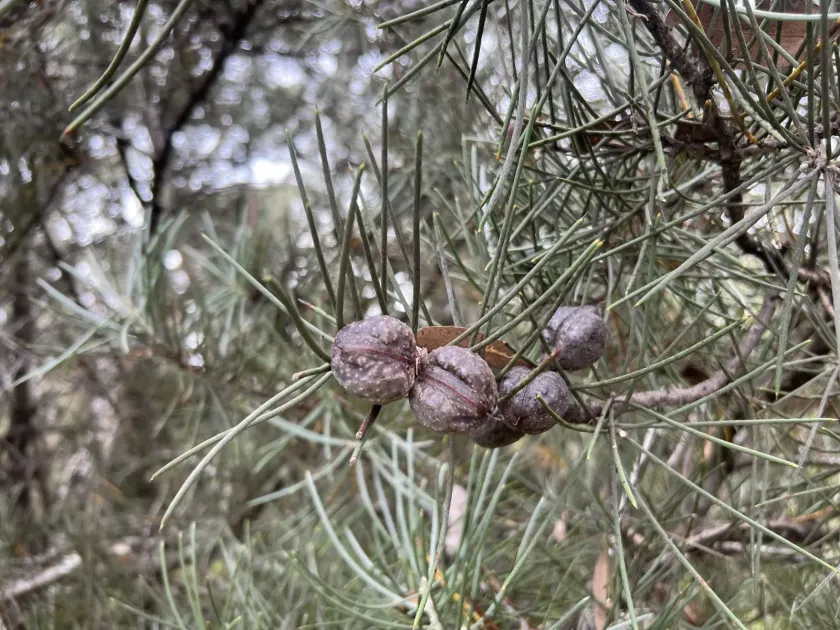
Needle Needlewood (Hakea lissosperma) is a member of the Proteaceae family. It typically grows as a large shrub or a small tree, characterized by its needle-like foliage and woody seed pods that are iconic for the genus.
The species is native to Tasmania and the southeastern regions of Australia. It thrives in diverse environments, ranging from alpine ridges to cool temperate forests, demonstrating high adaptability to fluctuating temperatures.
Cultivation requires very well-drained soil, as the plant is highly susceptible to root rot if the roots sit in water. Sandy or gravelly soils with low nutrient content are considered ideal for its growth.
It prefers a sunny position with adequate airflow. This plant does not require high levels of fertilization; in fact, it is important to avoid phosphorus-rich fertilizers, as they can be toxic to many members of the Proteaceae family.
Proper pruning can help maintain the desired shape and density of the shrub. Young plants should be monitored closely during the first year to ensure they are properly established before being left to tolerate harsher conditions.
Main diseases and pests
The primary concern for Hakea lissosperma is the presence of Phytophthora root rot, which is often fatal and stems from poor drainage conditions in the garden soil.
Insect pests such as scale insects or mealybugs can occasionally infest the foliage and stems, leading to stunted growth and leaf yellowing if left untreated.
Waterlogging remains the number one threat to the health of this species. Even in naturally wet climates, the soil must allow for rapid water movement to prevent pathogen accumulation.
Caterpillars and certain borers might attack the plant tissue, requiring regular inspection during the active spring growing season to minimize physical damage.
Environmental stress, such as extreme heat combined with drought, can also weaken the plant, making it more vulnerable to secondary infections or pest colonization.