
Hakea corymbosa
Hakea corymbosa
Description
Growing requirements
Hakea corymbosa is a perennial evergreen shrub belonging to the Proteaceae family, native to the southwestern regions of Western Australia. This species has adapted to specific mediterranean climate patterns characterized by hot, dry summers and cool, wet winters.
The plant requires well-draining, nutrient-poor soil, typical of sandy or rocky substrates. It is essential to ensure that the site has excellent drainage, as the root system is highly susceptible to fungal infections caused by waterlogging and poor soil aeration.
Full sun exposure is vital for the optimal development of Hakea corymbosa. The plant thrives in open spaces where it can receive direct sunlight throughout the day, which helps in maintaining the density and vigor of its needle-like foliage.
Regarding fertilization, this species is extremely sensitive to high phosphorus levels. It is recommended to use specialized fertilizers formulated for native Australian plants or avoid fertilization entirely if the soil naturally provides enough minerals for slow growth.
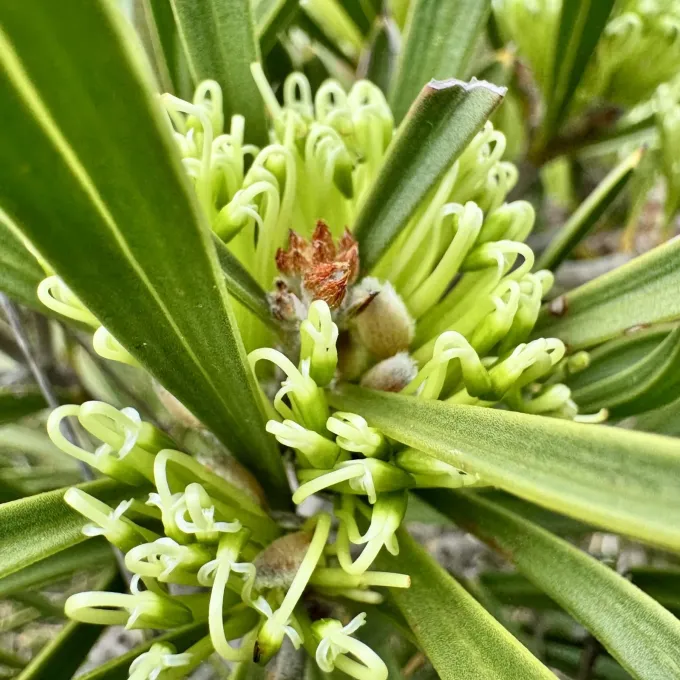
Botanically, the species is distinguished by its sharp, rigid leaves which act as a defense mechanism and a water-saving feature. During the blooming season, the shrub produces dense clusters of flowers that add significant visual interest to the landscape.
Harvesting
The primary use of Hakea corymbosa is in ornamental horticulture and the cut flower industry. Because of its hardy nature and dense growth habit, it is frequently used as a living hedge or a screening plant in xeric gardens.
For floral design, the inflorescences are highly valued for their sculptural quality and durability. They are often incorporated into architectural floral arrangements that require long-lasting, exotic-looking foliage and textures.
Harvesting is typically done during the peak of the flowering season. Gardeners or growers cut the stems at the base, ensuring that the tool is clean to prevent the introduction of pathogens into the vascular system of the harvested branches.
Propagation is primarily conducted through seeds, which require specific pre-treatment such as smoke treatment or heat to break dormancy. Successful germination depends heavily on maintaining steady moisture levels without saturating the potting medium.
The plant is highly drought-tolerant once established, making it a sustainable choice for water-wise landscaping projects. It requires minimal pruning, mostly to shape the plant or remove dead branches after the flowering cycle is complete.