
Hakea bucculenta
Hakea bucculenta
Description
Growing requirements
Hakea bucculenta, commonly known as Red Pokers, is a large, evergreen shrub belonging to the Proteaceae family. It is endemic to the arid regions of Western Australia, reflecting its evolution in harsh environments.
The species requires extremely well-draining soil, ideally sandy or gravelly in texture. It is highly intolerant of phosphorus-rich fertilizers and heavy, moisture-retaining soils that can lead to root degradation.
Cultivation should focus on providing full sun exposure to ensure robust growth and prolific flowering. It thrives in Mediterranean or arid climates where winters are mild and free from hard, prolonged frosts.
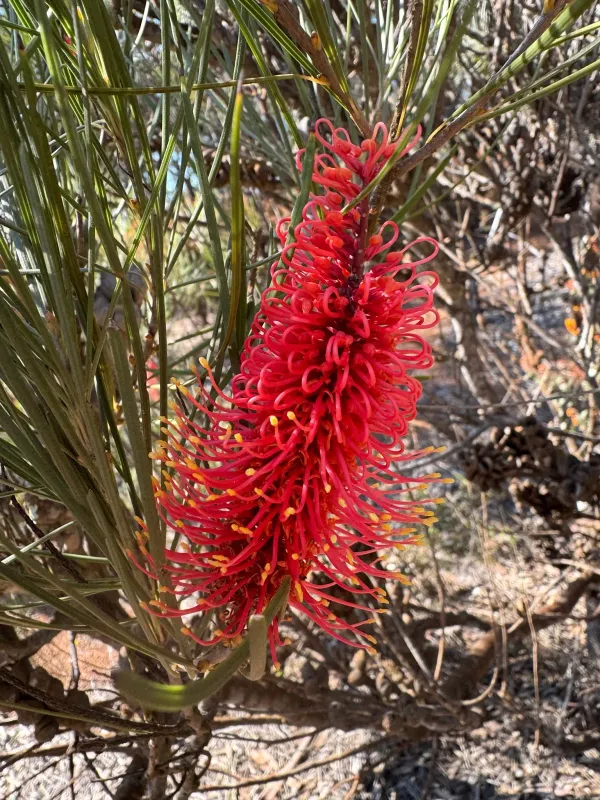
Botanically, the plant is recognized by its long, leathery leaves and spectacular racemes of bright red to orange flowers. These bloom primarily on older branches, creating a dramatic visual impact in the landscape.
Its primary use is ornamental, serving as a focal point in xeriscaping or as part of native flora gardens. It is highly regarded for its ability to attract nectar-feeding birds, making it a valuable addition to ecological gardens.
Main diseases and pests
The most significant pathogen affecting Hakea species is Phytophthora cinnamomi, which causes root rot in wet soil conditions. Ensuring the site remains dry around the base of the plant is the best preventative measure.
Pests are generally minimal if the plant is grown in its native-like conditions. Occasional outbreaks of aphids or scale insects may occur, but they rarely threaten the survival of mature, healthy specimens.