
Adenanthos cuneatus
Adenanthos cuneatus Labill.
Description
Growing requirements
Adenanthos cuneatus, commonly known as wedge-leaf jugflower, is a member of the Proteaceae family. This evergreen shrub is native to the coastal sandplains of southwestern Western Australia.
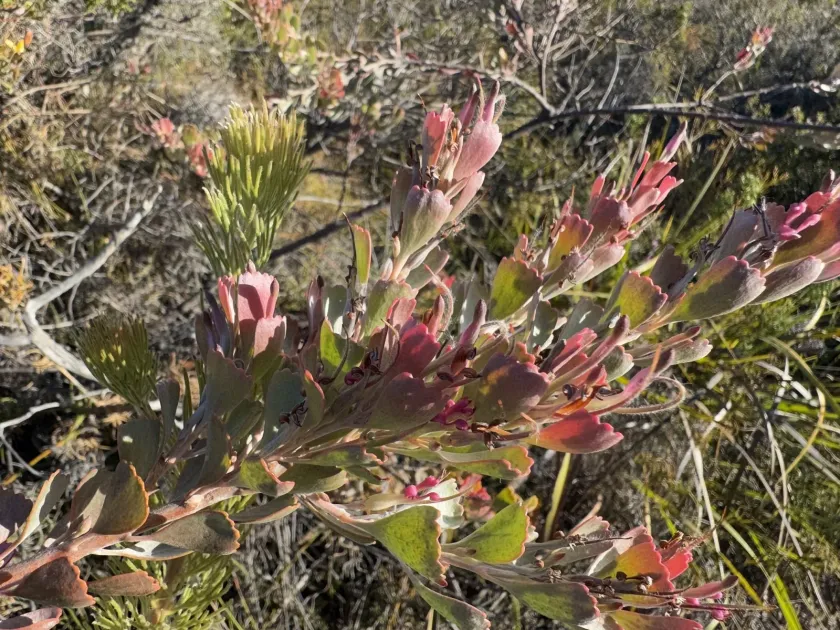
The plant is highly valued for its striking foliage, which features wedge-shaped leaves with a distinct silvery-grey appearance due to fine hairs on the surface.
To thrive, this species requires very well-draining, sandy, and nutrient-poor soils. It is particularly sensitive to high levels of phosphorus, which can be fatal to the plant.
It prefers full sun exposure to maintain its compact growth habit. Adequate air circulation is crucial to prevent the build-up of humidity around the dense foliage.
Watering should be managed carefully; it is essential to allow the soil to dry out between waterings to prevent root rot, which is the most common cause of plant failure in non-native environments.
Main diseases and pests
Root rot caused by Phytophthora species is the primary threat to Adenanthos cuneatus, especially in soils that lack proper drainage or are kept too wet.
Pests such as scale insects and mealybugs can occasionally infest the plant, usually occurring in greenhouse conditions or areas with poor ventilation.
Fungal leaf spot may develop if the plant is exposed to excessively humid conditions without sufficient light or airflow during the growing season.
Chemical control measures should be approached with caution as the plant is sensitive to various synthetic fertilizers and high-concentration pesticides.
Regular monitoring of the foliage and root health, combined with a strict avoidance of over-fertilization, are the best methods to manage potential threats.