
Yellow pimpernel
Lysimachia nemorum L.
Description
Growing requirements
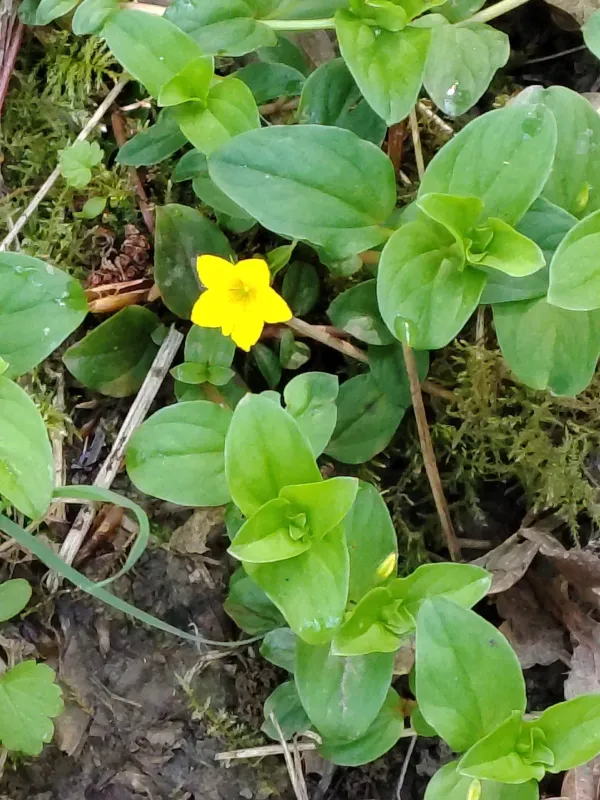
Yellow pimpernel (Lysimachia nemorum L.) is a creeping perennial herbaceous plant belonging to the Primulaceae family. Native to the woodlands of Europe, it is well-adapted to shaded, humid environments.
The plant features bright green, ovate leaves and solitary star-shaped yellow flowers. Its trailing stems spread along the ground, making it an excellent choice for naturalizing shaded areas under trees or shrubs.
For successful cultivation, it requires moist, humus-rich soil that mimics its natural woodland habitat. It performs best in partial to full shade, where it avoids the drying effects of direct sunlight.
The soil should be well-drained but consistently damp. While it loves moisture, stagnant water should be avoided to prevent root rot. Incorporating organic compost during planting enhances the soil structure.
In terms of propagation, it easily spreads via rhizomes and rooting stems. This vigorous growth habit makes it highly effective for suppressing weeds in damp landscape settings.
Main diseases and pests
Environmental stress is the primary threat to Yellow pimpernel, especially during hot and dry spells, which can cause significant wilting and foliage chlorosis.
Fungal diseases like powdery mildew may occur in stagnant, overcrowded, or poorly ventilated garden areas, requiring immediate thinning to restore airflow.
Slugs and snails are the most common pests, as they are attracted to the succulent foliage of the plant, especially in moist and cool spring weather.
Effective management includes maintaining proper planting distance and ensuring the substrate is clean and free of excessive debris where pests might harbor.
If chemical interventions are needed, always use products safe for ornamental perennial beds and follow local environmental regulations for pesticide application.