
Scarlet pimpernel
Lysimachia arvensis (L.) U. Manns & Anderb.
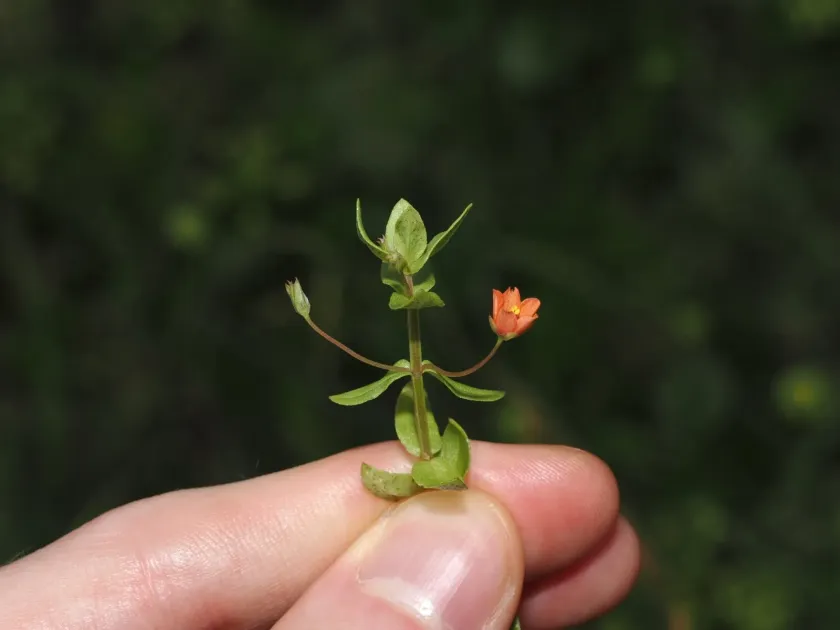
Description
Growing requirements
Scarlet pimpernel (Lysimachia arvensis), formerly classified as Anagallis arvensis, is an annual plant belonging to the Primulaceae family. It is widely recognized by farmers as a persistent weed in agricultural lands.
The plant originates from Europe and Western Asia but has become naturalized worldwide. It thrives in open, disturbed habitats including arable fields, vegetable gardens, and vineyard rows where the soil is frequently turned.
It prefers fertile, moist, and well-drained soils. However, its high adaptability allows it to colonize both heavy clay and light sandy soils, often competing directly with low-growing cash crops for resources.
Botanically, it features a procumbent habit with four-angled stems and ovate leaves. The flowers are small, typically red, though blue varieties exist, and they have a distinct mechanism of closing during overcast weather.
Agronomic management requires minimizing the soil seed bank. Since each plant produces a vast number of seeds, preventative measures such as stale seedbed technique and timely cultivation are essential for long-term reduction.
Main diseases and pests
The primary threat posed by this plant is crop yield loss due to resource competition. In dense infestations, the weed creates a mat that prevents sufficient aeration and nutrient uptake for main crop seedlings.
While not a primary host for major economic diseases, it can harbor common viruses that affect horticultural crops. Keeping field margins clean is a recommended practice to prevent pathogen reservoir development.
Pest pressure on scarlet pimpernel is low due to its natural chemical compounds, which can be toxic to some animals and insects. Consequently, natural biological controls are often insufficient to limit its spread.
Chemical control is the most common method in industrial farming. Selective herbicides are used in cereal and broad-leaved crops, though the plant's waxy leaf surface requires the addition of surfactants to maximize efficacy.
Integrated pest management suggests that manual removal combined with rotation of crops that provide a thick canopy cover significantly suppresses the presence of this weed in the long term.