
Gooseneck loosestrife
Lysimachia clethroides Duby
Description
Growing requirements
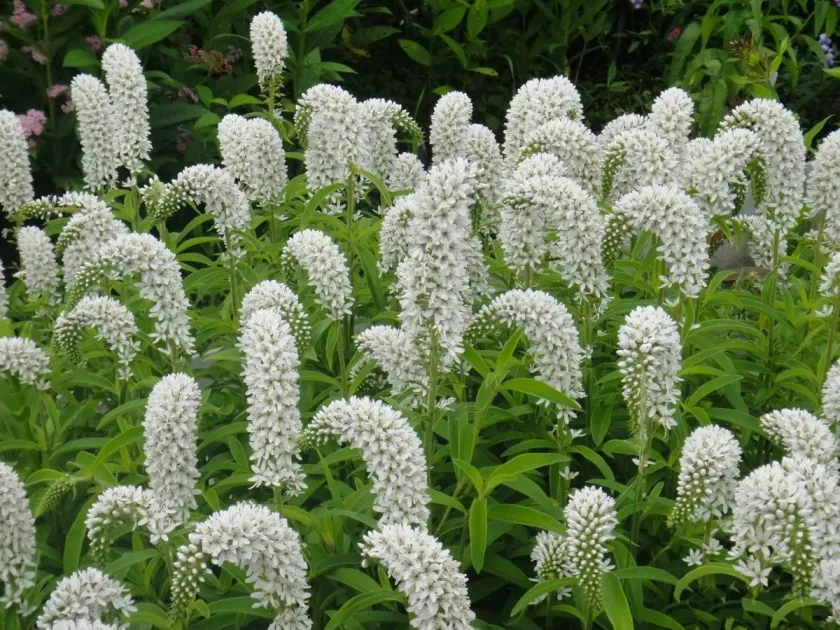
Gooseneck loosestrife is a herbaceous perennial belonging to the Primulaceae family. It is widely recognized for its elegant, arching spikes of white flowers that resemble the neck of a goose, providing unique texture to garden borders.
The plant originates from East Asia, specifically from regions in China, Japan, and Korea. It is well-adapted to moist environments and thrives in meadows and woodland edges where soil moisture is relatively consistent.
Regarding soil requirements, this species prefers deep, moisture-retentive, and nutrient-rich soil. It is highly adaptable to various soil types, but performs best in loamy substrates with good organic matter content.
The plant is known for its vigor and ability to spread via rhizomes. Gardeners should select a location with full sun to partial shade, ensuring that there is enough space for the plant to expand, or use containers to restrict growth.
Maintenance is straightforward: regular watering is essential during dry spells, and thinning out the rhizomes every few years helps maintain the vigor of the colony and prevents the plant from becoming invasive in small areas.
Main diseases and pests
Aphids are the most common pests affecting this plant, typically colonizing the flower spikes. Heavy infestations can distort plant development and require prompt application of appropriate horticultural treatments.
Leaf-feeding beetles can cause aesthetic damage by chewing holes in the foliage. Hand-picking or applying eco-friendly insecticides is usually sufficient to manage these populations in a domestic garden setting.
Fungal diseases, including rusts and leaf spots, may occur if the foliage remains wet for extended periods or if air circulation is inadequate. Proper spacing during planting is the best preventative strategy.
Root rot is a potential risk in poorly drained soils. Ensuring proper drainage at the planting site is crucial to prevent the rhizomes from decaying during periods of heavy rainfall or over-irrigation.
Healthy plants generally resist most threats. Providing adequate nutrition and ensuring the plant is not overly crowded will naturally enhance its resilience against common garden pathogens and insect pests.