
Paeonia cambessedesii
Paeonia cambessedesii
Description
Growing requirements
Paeonia cambessedesii, commonly known as the Balearic peony, is a perennial herbaceous plant belonging to the Paeoniaceae family. Native to the Balearic Islands, this rare species naturally thrives in rocky habitats and sheltered limestone gorges.
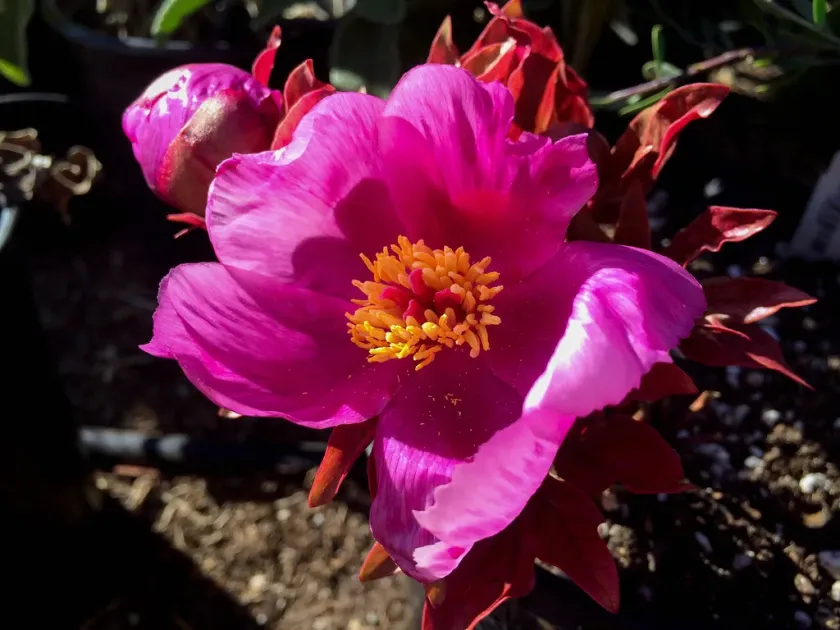
The plant is distinguished by its unique morphological traits, including dark green leaves with a striking purple flush on the undersides. Reaching a modest height of 30–50 cm, it produces early-blooming, cup-shaped flowers in shades of soft to deep pink, featuring prominent golden stamens.
Cultivation requires specific environmental conditions, primarily well-drained, humus-rich soil with a neutral to alkaline pH. Good drainage is non-negotiable, as the root system is highly susceptible to rot if water persists around the crown, especially during the dormant winter months.
This species prefers a position in partial shade or dappled light, mimicking its natural mountainous environment. Due to its Mediterranean origins, it is often best suited for rock gardens, cold frames, or greenhouses in regions where winters are excessively wet or cold.
In terms of agricultural and horticultural use, it is prized as a collector's specimen. Its aesthetic appeal makes it highly sought after for specialized botanical gardens and for those dedicated to cultivating rare, exotic perennial flowers in temperate climates.
Main diseases and pests
Botrytis, or grey mold, is the most common fungal threat, typically triggered by high humidity or poor air circulation around the foliage. Prompt removal of infected parts and the application of suitable fungicides are essential practices for maintaining plant health.
Root pests, including nematodes, and occasional aphid infestations on the tender new growth can compromise the plant's vigor. Maintaining proper soil structure and performing regular health inspections are key to preventing these biotic stresses from becoming fatal to the plant.