
California peony
Paeonia californica
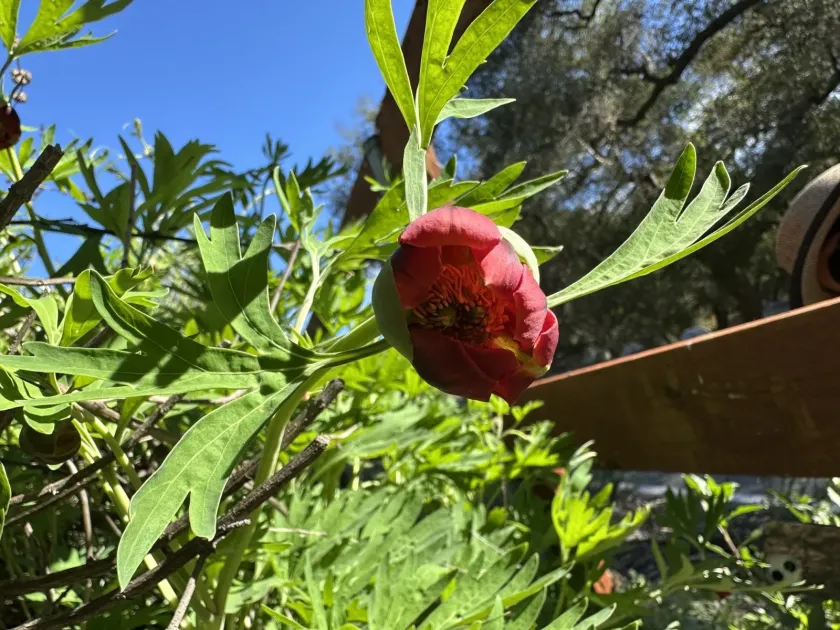
Description
Growing requirements
The California peony (Paeonia californica) is a unique perennial species belonging to the Paeoniaceae family. It is an endemic plant native to the coastal regions and inland hills of California, USA.
This species thrives in a Mediterranean-type climate, characterized by cool, wet winters and hot, dry summers. It naturally occurs in open woodlands and slopes where the soil provides excellent drainage.
Cultivating this plant requires well-draining, loose soil, preferably of a sandy or rocky texture. It is highly intolerant of waterlogged conditions, which lead to root rot in a very short timeframe.
A distinctive botanical feature is its obligate summer dormancy. The foliage typically dies back completely when the hot, dry season begins, which is a vital adaptive mechanism for survival.
In garden settings, growers must strictly regulate irrigation: provide consistent water during the spring growing season and ensure the soil remains completely dry throughout the summer months.
Main diseases and pests
The primary threat to the health of the California peony is root rot caused by stagnant moisture. Proper soil aeration is the most important factor in preventing fungal infections.
Botrytis blight is a significant risk when humidity levels remain high during the spring, which can lead to rapid decay of developing buds and stems if the plants are crowded.
Aphids can frequently colonize the tender spring shoots, causing leaf distortion and stress. Regular monitoring of the foliage is recommended to catch infestations early.
Soil-borne pathogens and root-knot nematodes present a major danger to the longevity of the plant, especially if it is planted in soils previously used for other susceptible crops.
Competitive weeds are detrimental to the growth of this peony. Careful hand-weeding is necessary to avoid damaging the brittle root system during the early stages of spring emergence.