
Acanthophippium splendidum
Acanthophippium splendidum
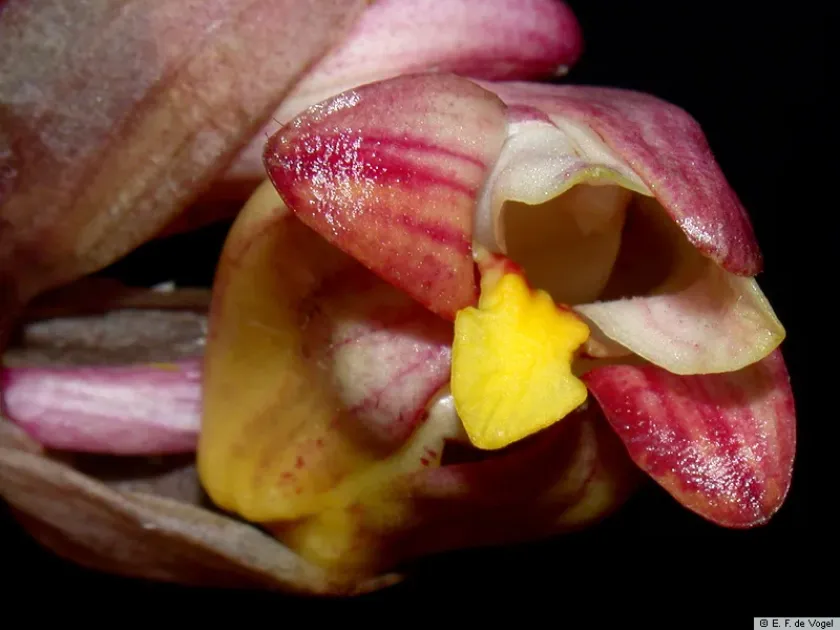
Description
Growing requirements
Acanthophippium splendidum is a distinctive species of ground orchid belonging to the Orchidaceae family. It is characterized by its large, fleshy pseudobulbs and unique, tulip-like flowers that exhibit a waxy, thick texture and vibrant coloration.
Native to the tropical regions of Southeast Asia, this orchid naturally thrives in humid, shaded forest floors. It is adapted to living in rich, organic substrates where moisture levels remain consistently high throughout the year.
In cultivation, this plant requires a stable, warm environment with temperatures ideally ranging between 20°C and 26°C. It is highly sensitive to direct sunlight, which can easily damage its leaves, making filtered light or partial shade essential.
High relative humidity is critical for the success of Acanthophippium. Growers should aim for humidity levels of 70% or higher, using humidifiers or pebble trays to maintain moisture levels in an indoor environment or greenhouse setting.
The potting medium must be porous and well-draining to prevent root suffocation. A mixture consisting of pine bark, perlite, sphagnum moss, and charcoal is recommended to mimic the natural forest floor conditions and support healthy root development.
Main diseases and pests
The primary threats to Acanthophippium splendidum are fungal and bacterial infections triggered by poor air circulation and excessive moisture. Root and pseudobulb rot are the most common consequences of overwatering, especially in cooler temperatures.
Pests such as mealybugs, scale insects, and spider mites frequently target these orchids. They tend to cluster in the leaf axils or on the undersides of leaves, making regular monitoring of the plant essential for early detection.
To prevent disease outbreaks, it is advised to ensure constant airflow around the plant. Using a small circulation fan in the grow area can help reduce humidity buildup on the leaf surfaces and prevent the growth of harmful molds.
If an infestation occurs, manual removal of pests followed by the application of systemic pesticides or horticultural oils is necessary. Always test any treatment on a small part of the plant first to ensure no adverse reaction occurs.
Maintaining a clean growing space and removing any dead plant material helps to limit the habitat for potential pests and pathogens, ensuring the long-term health and vigorous growth of the collection.