
Callisia soconuscensis
Callisia soconuscensis Matuda
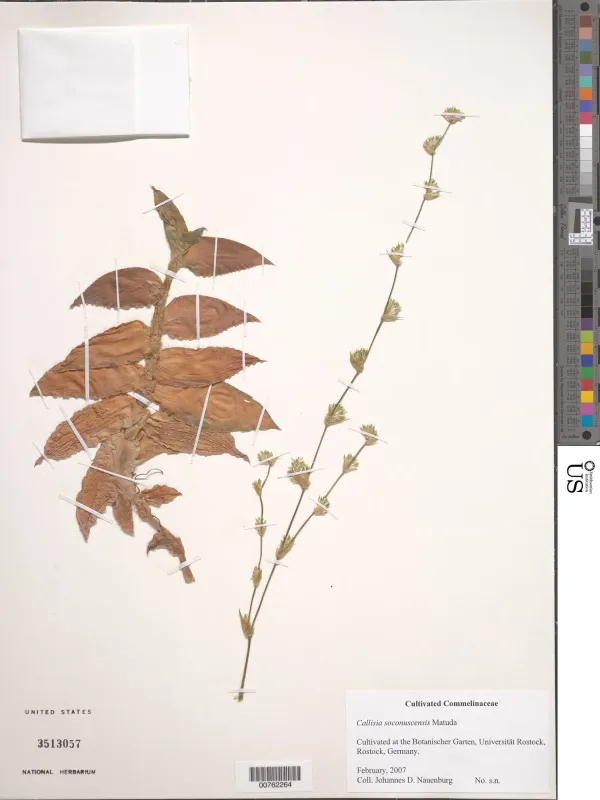
Description
Growing requirements
Callisia soconuscensis is a perennial herb belonging to the Commelinaceae family. Originating from the tropical rainforests of Soconusco, Mexico, this plant thrives in humid environments and warm climates, reflecting its native ecological niche.
Botanically, the plant is characterized by its succulent, trailing stems that exhibit rapid vegetative growth. The leaves are typically lance-shaped and arranged in a dense, cascading pattern, which contributes to its aesthetic appeal in botanical collections and indoor landscaping.
Cultivation requirements involve a well-draining, nutrient-rich potting mix with a pH level ranging from 6.0 to 6.5. Because the roots are delicate, aeration of the soil is vital to prevent anaerobic conditions that can lead to rapid decay of the vascular tissues.
In terms of climate, Callisia soconuscensis requires stable temperatures, ideally between 20°C and 25°C. While it is tolerant of low light levels, it reaches optimal growth rates under bright, indirect sunlight, ensuring the retention of its vibrant leaf coloration.
The primary economic and practical use of this species is in the ornamental plant trade. It serves as an excellent ground cover in tropical greenhouse environments or as a hanging basket plant, appreciated for its hardiness and fast-spreading growth habit.
Main diseases and pests
The most common pests affecting this species include spider mites, which thrive in dry indoor air, and mealybugs. Effective management includes maintaining higher humidity levels and periodic inspection of the leaf axils where these pests tend to congregate.
Disease management focuses primarily on preventing fungal pathogens such as Pythium or Phytophthora. These are most frequently caused by poor soil drainage and excessive irrigation, leading to root rot that can quickly become irreversible if not addressed promptly.